
 EN
EN
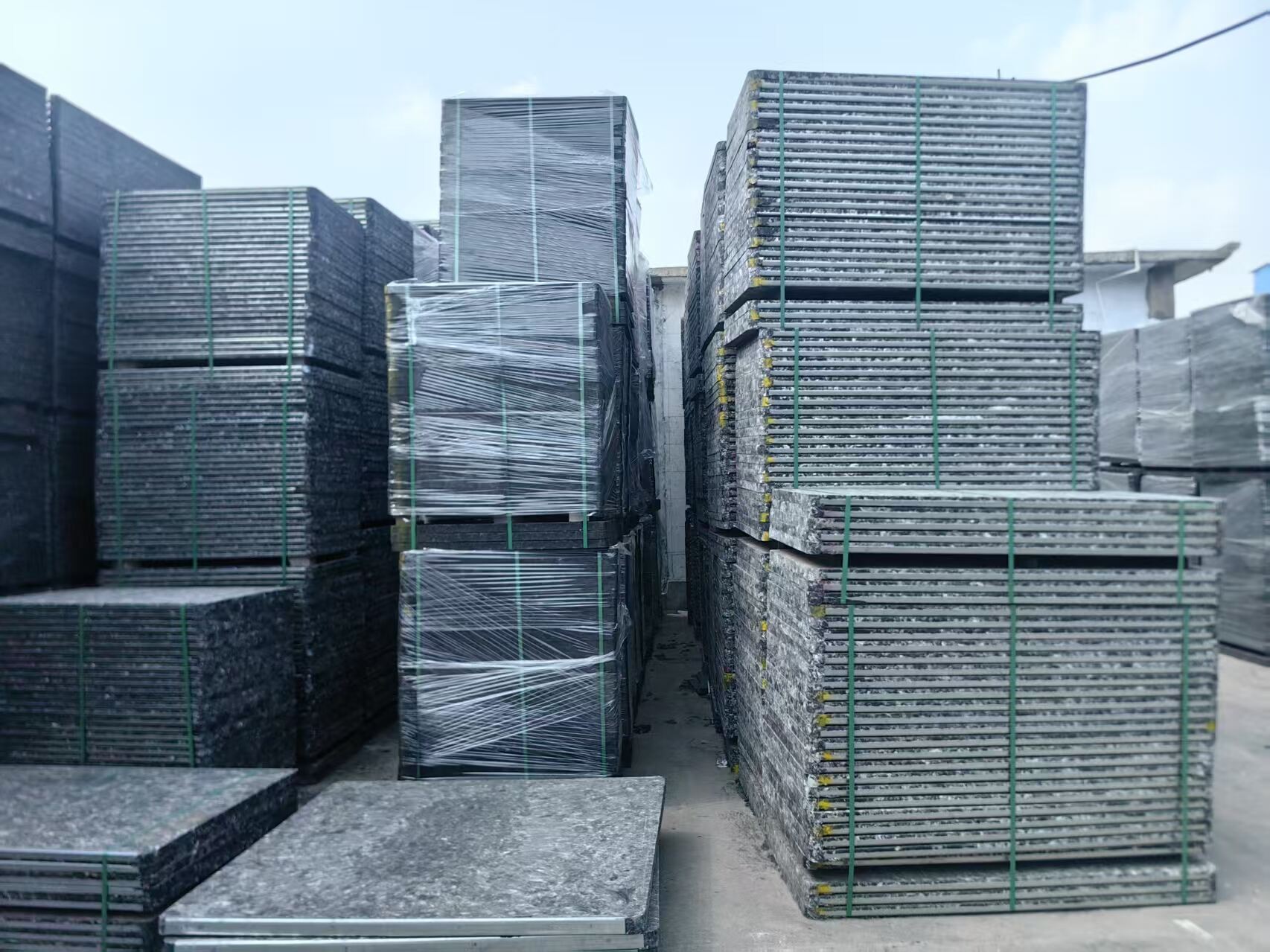
Total Cost of Ownership for Brick Pallets: GMT vs PVC vs Wood
Upfront Acquisition Cost and Installation Readiness
Wooden pallets offer the lowest initial purchase price but require frequent replacement due to moisture damage, cracking, and dimensional instability. PVC pallets sit at a moderate price point—but quality varies widely, with lower-cost variants often sacrificing structural integrity and long-term reliability. GMT glass-fiber-reinforced thermoplastic pallets command a higher upfront investment, yet their precision-engineered design delivers immediate operational readiness: no pre-use conditioning, surface treatment, or dimensional calibration is needed. Unlike wood or PVC, GMT pallets arrive fully functional—reducing transition downtime and eliminating associated labor and material costs.
Lifecycle Cost Breakdown: Maintenance, Replacement, and Downtime
GMT pallets deliver superior economic performance over time—not through lower acquisition cost, but by minimizing recurring operational expenses. A 2024 lifecycle analysis published in the Journal of Cleaner Production found GMT pallets last 3.2× longer than PVC alternatives, with service lives averaging 8–10 years versus 6 years for PVC and just 2 years for wood. This longevity translates directly into measurable reductions across key cost drivers:
| Cost Factor | GMT Reduction vs PVC | GMT Reduction vs Wood |
|---|---|---|
| Replacement Purchases | 62% | 75% |
| Downtime Losses | 43% | 68% |
| Maintenance Labor | 57% | 82% |
GMT’s thermal stability (–40°C to 90°C) and ultra-low water absorption (<0.5%) virtually eliminate warping, cracking, and hygroscopic swelling—leading causes of unplanned production stoppages in brick manufacturing.
ROI Timeline in High-Volume Brick Production Environments
In high-output facilities handling ≥12 tons of bricks daily, GMT pallets achieve full return on investment within 14 months—particularly in automated kiln systems. Data from the European Brick Association (2024) shows annual savings of 42% versus PVC and 58% versus wood, driven by three core efficiencies:
- Reduced rotation frequency: Only 24% of GMT pallets require replacement annually compared to PVC;
- Zero landfill disposal costs: GMT is fully recyclable at end-of-life;
- Labor optimization: Consistent dimensions and rigidity cut handling time by 30%, reducing operator fatigue and error rates.
For plants producing over 1 million bricks monthly, cumulative savings exceed $18,000 per year for every 100-pallet fleet—by year three.
Performance Benchmarks Critical for Brick Pallet Durability
Load Capacity and Structural Integrity Under Repeated Compression (ASTM D1185)
Compliance with ASTM D1185 is essential for pallets operating on high-speed brick lines. GMT pallets meet and exceed this standard with a bending strength of 51.0 MPa, static load capacity 12,000 kg, and elastic modulus of 3.7 GPa—ensuring resistance to permanent deformation under repeated stacking, vibration, and compression. Unlike wood or standard PVC, GMT retains dimensional fidelity across thousands of loading cycles, minimizing unplanned line stops caused by pallet failure.
Thermal-Hygric Stability: Elastic Modulus Retention from –20°C to 70°C and 30–95% RH
Brick production subjects pallets to extreme thermal and humidity shifts—from steam curing chambers to outdoor storage. GMT pallets maintain elastic modulus stability across –20°C to 70°C and 30–95% relative humidity, thanks to <0.5% water absorption and Shore hardness of 72. This prevents swelling, warping, and surface degradation that compromise brick release and automated handling accuracy. Their extended operating range (–40°C to 90°C) ensures consistent performance in both freezing climates and high-heat curing environments.
How GMT Material Science Optimizes Brick Pallet Longevity
GMT (Glass Mat Reinforced Thermoplastic) merges the rigidity of fiber reinforcement with the processability and resilience of engineered thermoplastics. Its 3.7 GPa elastic modulus and 51.0 MPa bending strength resist deformation far more effectively than wood or PVC—even under sustained compression loads. With impact strength exceeding 30 kJ/m² (more than double typical PVC), GMT withstands drops, conveyor impacts, and mechanical handling without microcracking. Its thermal resilience (–40°C to 90°C) and near-zero moisture uptake (<0.5%) prevent the dimensional drift, mildew growth, and surface softening that erode conventional pallet life. Field data from high-volume brick producers confirms a 76% reduction in replacement frequency versus standard plastic—and a verified service life of 8–10 years. Crucially, GMT’s recyclability closes the loop: it avoids landfill fees while supporting circular-material strategies. In essence, GMT doesn’t just improve one property—it synchronizes rigidity, toughness, environmental resistance, and dimensional fidelity to extend usable life, reduce total cost of ownership, and strengthen production continuity.
FAQ
Which type of pallet has the longest lifespan?
GMT pallets have the longest lifespan, averaging 8–10 years, compared to PVC's 6 years and wood's 2 years.
What are the main advantages of using GMT pallets?
GMT pallets offer advantages such as high thermal stability, minimal water absorption, robust structural integrity, recyclability, and reduced maintenance costs.
How quickly can GMT pallets provide a return on investment?
In high-output brick production environments handling ≥12 tons of bricks daily, GMT pallets achieve ROI within 14 months.
Are GMT pallets environmentally friendly?
Yes, GMT pallets are recyclable, avoiding landfill disposal costs and supporting circular material strategies.
How do GMT pallets perform under extreme conditions?
GMT pallets maintain their structural integrity across temperature ranges of –40°C to 90°C and humidity levels of 30–95% RH, making them ideal for harsh environments.