
 EN
EN
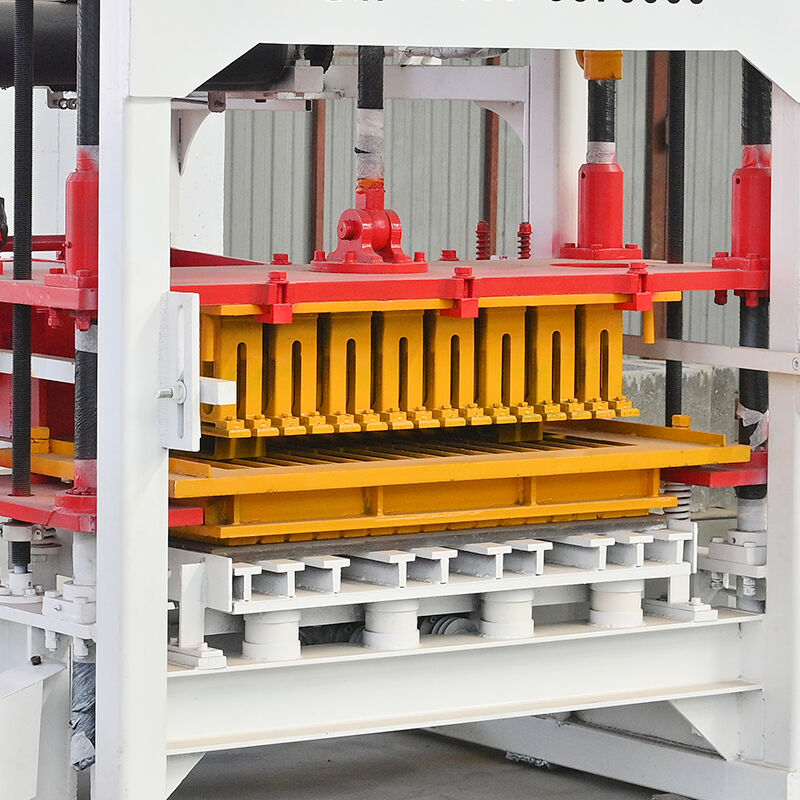
Hydraulic Pressure Instability in Hydraulic Brick Making Machines
Symptoms: Erratic Pressing Force and Inconsistent Brick Density
Hydraulic brick making machines exhibit pressure instability through irregular pressing force during compaction—stuttering or fluctuating tonnage instead of delivering steady load. This directly compromises brick quality: bricks from the same batch vary in weight, structural integrity, and density. Core density differences of up to 25% (e.g., one brick at 75% relative solidity versus another) are common. Research confirms that just a 10% pressure fluctuation can drive over 8% density variation across a production run—leading to higher rejection rates and bricks that fail compressive strength tests. Without intervention, minor inconsistencies compound over time into systemic quality deviations that disrupt scheduling and customer deliveries.
Root Causes: Pump Wear, Valve Hysteresis, and Air Entrapment
Three interrelated mechanical factors underlie most hydraulic pressure instability:
- Pump wear: As piston pump internal clearances widen with use, volumetric efficiency declines—causing pressure dips during peak demand.
- Valve hysteresis: Eroded or sticky spool valves delay or incompletely shift, creating transient pressure losses while the system struggles to maintain setpoint.
- Air entrapment: Compressible air pockets in hydraulic fluid absorb energy rather than transmit force. Even 2% entrained air reduces system stiffness by 60%, undermining control precision.
Early detection is critical. Regular oil sampling and pump condition monitoring—aligned with ISO 4406 cleanliness standards—enable predictive maintenance before instability escalates into unplanned downtime.
Leakage and Seal Degradation in Hydraulic Brick Making Machines
Fluid leaks and seal failures reduce productivity, raise maintenance costs, and threaten system reliability. Compromised seals allow hydraulic oil to escape, lowering operating pressure and exposing components to contamination and overheating risks. Proactive inspection and scheduled replacement—not reactive repair—are essential for sustained performance.
Critical Failure Points: Cylinder Rods and Manifold Junctions Under High-Cycle Operation
Cylinder rods and manifold junctions endure extreme cyclic stress—repeated motion, pressure spikes, and lateral loads. Over thousands of cycles, rod seals lose elasticity and begin weeping; manifold gaskets develop micro-gaps from vibration and thermal expansion. These conditions accelerate extrusion and compression set, especially in high-duty cycles typical of brick molding. Internal bypass leakage then triggers subtle but consequential pressure drops—eroding brick density uniformity long before catastrophic failure occurs. Prioritizing inspection at these points enables early mitigation and avoids downstream quality loss.
Accelerating Factors: Thermal Cycling and Abrasive Dust Ingress in Brick Plant Environments
Brick plants impose uniquely harsh operating conditions. Thermal cycling—repeated heating and cooling—fatigues elastomeric seals, causing hardening, cracking, and eventual loss of sealing force. Standard nitrile (NBR) seals degrade rapidly above 82°C, losing flexibility and resilience. Simultaneously, airborne silica dust infiltrates past worn wiper seals, abrading seal surfaces and contaminating hydraulic fluid. This dual assault accelerates wear far beyond nominal service life. Upgrading to high-temperature fluorocarbon (FKM) or hydrogenated nitrile (HNBR) seals—and pairing them with dust-resistant double-lip wipers—significantly extends seal longevity and maintains system integrity.
Overheating and Fluid Contamination in Hydraulic Brick Making Machines
Operational Impact: Oil Temperature Rise 70°C Leading to Viscosity Loss and Oxidation
Sustained operation above 70°C initiates rapid hydraulic fluid degradation. Beyond this threshold, oxidation accelerates dramatically, forming sludge that clogs servo valves and increases pump wear by up to 40%, per fluid dynamics studies. Viscosity Index (VI) drops exponentially—each 10°C rise effectively halves fluid thickness—degrading lubrication at cylinder walls and bushings. Metal-to-metal contact follows, generating particulate contamination at rates exceeding 150 ppm/hour. Concurrently, seal hardening progresses 3.2× faster than manufacturer-rated life, opening microleak pathways for external abrasives. The result is a self-reinforcing cycle: contaminated fluid becomes abrasive, accelerating valve and pump wear while further elevating temperatures.
Fluid Strategy: Advantages of Synthetic Ester-Based Hydraulic Fluids for High-Duty Hydraulic Brick Making Machines
Synthetic ester-based hydraulic fluids offer superior thermal and oxidative stability for high-cycle brick molding applications. Their polar molecular structure provides inherent advantages over conventional mineral oils:
- Oxidation resistance: 300% longer service life versus Group I base stocks
- Polar attraction: Forms protective boundary films on metal surfaces, reducing friction and wear
- Hydrolytic stability: Resists acid formation even with moisture ingress from clay slurry exposure
Field data from ISO VG 46 synthetic ester installations shows a 62% reduction in overheating incidents. Their natural detergency also inhibits varnish buildup in directional valves, maintaining flow tolerances within ±3% over 10,000 operating hours—a key factor in dimensional consistency for interlocking brick production.
Control System Misalignment in Hydraulic Brick Making Machines
Solenoid Response Lag and Its Effect on Cycle Consistency and Brick Dimensional Accuracy
Solenoid response lag—delayed actuation of hydraulic valves after receiving electrical commands—disrupts the precise timing required for synchronized mold closure, filling, and pressing. Even a 50-millisecond delay introduces measurable inconsistency in pressure application during compaction. Studies show this directly increases dimensional variance by up to 1.5 mm in finished bricks. Operators often notice it first as irregular flashing patterns, inconsistent brick height, or batch-to-batch variations in face dimensions. In interlocking brick systems—where tight tolerances are non-negotiable—the cumulative effect is elevated scrap rates and rework costs.
Modernization Pathway: Retrofitting PWM-Controlled Proportional Valves for Precision Control
Replacing legacy on/off solenoid valves with pulse-width modulation (PWM)-controlled proportional valves delivers substantial improvements in motion control fidelity. These valves enable microsecond-level flow modulation, allowing real-time adaptation to load changes and dynamic pressure demands. Field deployments confirm a 40% reduction in dimensional deviation and 15% faster cycle times post-retrofit. Implementation requires new valve manifolds, controller algorithm recalibration, and integration of real-time pressure feedback sensors—ideally supported by hydraulic circuit simulation prior to commissioning. The upgrade not only enhances production consistency but also extends component life by optimizing fluid dynamics and reducing mechanical shock.
FAQ Section
What causes hydraulic pressure instability in brick making machines?
Hydraulic pressure instability is typically caused by pump wear, valve hysteresis, and air entrapment. These factors lead to irregular pressing force and inconsistent brick density.
How can seal degradation affect brick making machines?
Seal degradation leads to fluid leakage, lowering operating pressure and compromising system reliability. Over time, it can affect brick density uniformity and increase maintenance costs.
What is the impact of overheating on hydraulic fluids?
Sustained overheating initiates fluid degradation, viscosity loss, and sludge formation, leading to component wear and system inefficiency. This disrupts brick production quality over time.
How does solenoid response lag affect brick dimensional accuracy?
Delayed solenoid actuation disrupts the precise pressure application needed during compaction, increasing dimensional variance in bricks and leading to elevated scrap rates.