
 EN
EN
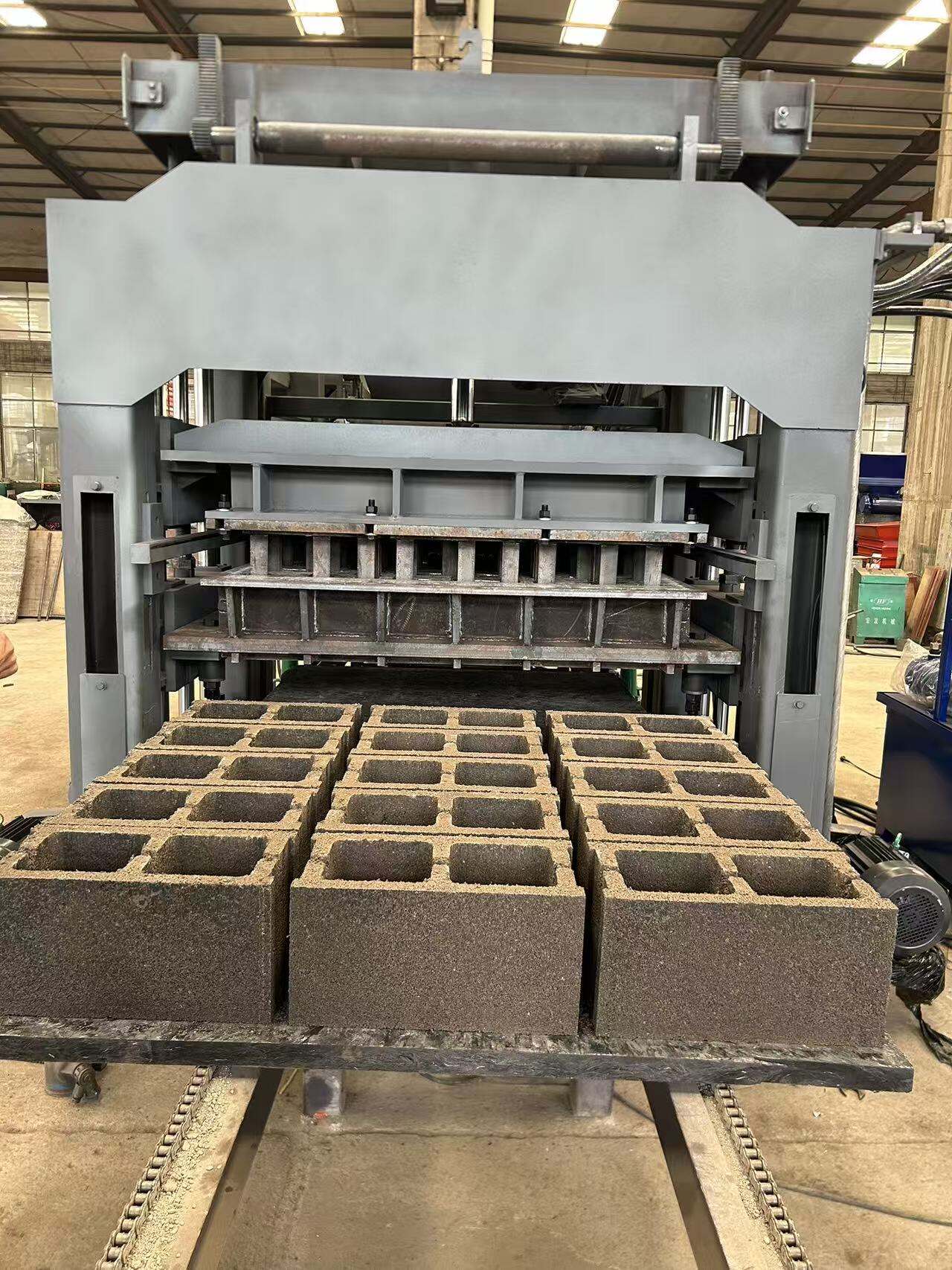
Upfront Cost Structure of Automatic Concrete Block Making Machines
Core Machine Pricing and Configuration Tiers (Semi-Auto vs. Fully Automatic)
Investing in an automatic concrete block making machine requires significant upfront capital, with pricing closely tied to automation level and production scalability. Semi-automatic models range from $15,000 to $40,000 and deliver 800–1,200 blocks/hour—relying on basic hydraulics and manual material feeding. Fully automatic systems, by contrast, cost $50,000 to $150,000 and achieve 2,000–3,500 blocks/hour, integrating PLC controls, robotic pallet handling, and closed-loop curing systems that enhance consistency and reduce operator dependency.
| Configuration Tier | Price Range | Production Capacity (Blocks/Hour) | Key Automation Features |
|---|---|---|---|
| Semi-Automatic | $15k–$40k | 800–1,200 | Basic hydraulics, manual material feeding |
| Fully Automatic | $50k–$150k | 2,000–3,500 | PLC controls, robotic pallet handling, closed-loop curing |
Essential Ancillary Costs: Site Preparation, Electrical Infrastructure, and Foundation Requirements
The machine itself represents only part of the total investment. Site preparation—including grading, drainage, and ventilation—costs $5,000–$20,000 depending on terrain and facility readiness. Electrical upgrades to support stable three-phase power (380V–480V), especially for high-capacity units drawing 25–40 kW, add $7,000–$15,000. A reinforced concrete foundation (minimum M25 grade, 300mm depth) is non-negotiable for vibration control and structural integrity, costing $8,000–$12,000. Collectively, these ancillary requirements typically increase the base machine cost by 30%–50%.
Geographic Cost Variables: Import Duties, Local Compliance, and Regional Supplier Pricing
Location shapes acquisition cost through tariffs, certification, and supplier economics. Import duties vary widely—from 15% in ASEAN markets to 45% in parts of Africa—while compliance with CE, ISO, or local safety standards adds $3,000–$8,000. European-manufactured machines carry a 15%–20% price premium over Asian equivalents but often include robust technical support and longer warranty coverage. As reported in the Global Construction Machinery Report 2023, these geographic variables can produce 20%–40% cost differentials for functionally identical equipment.
ROI Calculation Framework for Automatic Concrete Block Making Machines
Breakeven Timeline Analysis: Real-World Data from 18–30 Month Operational Benchmarks
Industry data shows automatic concrete block making machines typically reach breakeven within 18 to 30 months—provided annual output exceeds 500,000 blocks. Labor savings are the dominant driver: replacing a 10-person manual team with one automated line saves approximately $280,000 per year in wages alone. Coupled with reduced material waste—dropping from 8–12% to under 2.5%—these efficiencies compress payback timelines significantly. While maintenance remains consistent across systems at $0.02–$0.05 per block, automation’s labor leverage delivers decisive ROI acceleration.
5-Year Net Profit Comparison: Automated vs. Manual Production Systems
Over five years, the financial divergence between automated and manual operations becomes pronounced. A 2024 case study of mid-sized producers found automated lines generated $1.2 million in cumulative net savings versus manual setups. These gains stem from a 60–75% reduction in operators per shift, 40% lower material waste, and 30% faster cycle times. Five-year ROI for automated systems averages 28–34%, whereas manual lines increasingly operate at a net loss due to rising labor (+14% annually since 2021) and raw material costs (+22% annually). Though manual machines cost $15,000–$25,000 versus $85,000–$220,000 for full automation, long-term profitability strongly favors automation for any operation targeting 500,000+ blocks per year.
Production Capacity as the Primary ROI Accelerator
Throughput-to-Cost Ratio: How 1,200–3,000 Blocks/Hour Lowers Unit Production Cost
Production capacity is the most direct lever for improving ROI—driving down unit costs through economies of scale. Machines operating at 2,000–3,000 blocks/hour spread fixed capital and overhead costs across far greater output volumes than semi-auto or manual alternatives. For example:
- At 2,500 blocks/hour and 8-hour daily operation, output reaches 20,000 blocks per shift
- Manual methods yield only 200–400 blocks/hour, requiring five times the labor for equivalent volume
- This throughput advantage reduces per-block production costs by up to 40% compared to semi-automatic systems
High-volume operation minimizes idle time, maximizes equipment utilization, and creates a compounding effect: lower unit costs enable competitive pricing, which fuels higher sales volume—and faster capital recovery. Producers consistently report 18–24 month payback periods when sustaining output above 2,000 blocks/hour.
Operational Savings That Compound ROI
Labor Efficiency Gains: 60–75% Reduction in Operators per Shift
An automatic concrete block making machine cuts operator requirements per shift by 60–75%. Where a manual line may need eight workers for batching, molding, stacking, and quality checks, a fully automated system runs reliably with just two operators overseeing monitoring, maintenance, and logistics. This reduction slashes payroll expenses, lowers training and turnover costs, and mitigates risk associated with labor shortages—transforming labor efficiency into sustained financial resilience.
Material Waste Optimization: From 8–12% (Manual) to <2.5% (Automatic)
Manual production suffers from inconsistent mixing, imprecise dosing, and handling errors—leading to 8–12% material waste. Automated systems eliminate variability through precision batching, controlled vibration compaction, and uniform curing protocols, reducing waste to under 2.5%. The impact compounds: less raw material consumed, fewer rejected units, lower disposal fees, and minimal rework. Over a year, this optimization alone contributes tens of thousands of dollars in bottom-line savings—directly accelerating ROI.
FAQ Section
What is the difference between semi-automatic and fully automatic concrete block making machines?
Semi-automatic machines rely on basic hydraulics and manual material feeding, producing 800–1,200 blocks/hour. Fully automatic systems integrate advanced features like PLC controls, robotic pallet handling, and closed-loop curing, yielding 2,000–3,500 blocks/hour.
How do ancillary costs affect the total investment in automatic concrete block making machines?
Ancillary costs such as site preparation, electrical upgrades, and foundation requirements can increase the base machine cost by 30%–50%. These expenses ensure operational efficiency and structural integrity.
What factors influence geographic cost variations?
Geographic variables such as import duties, compliance requirements, and supplier pricing can create 20%–40% cost differentials for similar equipment.
What is the typical ROI timeline for these machines?
Machines typically reach breakeven within 18 to 30 months with annual output exceeding 500,000 blocks, driven by labor savings and reduced material waste.
How does production capacity drive ROI acceleration?
Higher production capacity reduces unit costs, enabling economies of scale. Machines operating at 2,000–3,000 blocks/hour spread fixed costs across larger output volumes, improving profitability.
Table of Contents
- Upfront Cost Structure of Automatic Concrete Block Making Machines
- ROI Calculation Framework for Automatic Concrete Block Making Machines
- Production Capacity as the Primary ROI Accelerator
- Operational Savings That Compound ROI
-
FAQ Section
- What is the difference between semi-automatic and fully automatic concrete block making machines?
- How do ancillary costs affect the total investment in automatic concrete block making machines?
- What factors influence geographic cost variations?
- What is the typical ROI timeline for these machines?
- How does production capacity drive ROI acceleration?