
 EN
EN
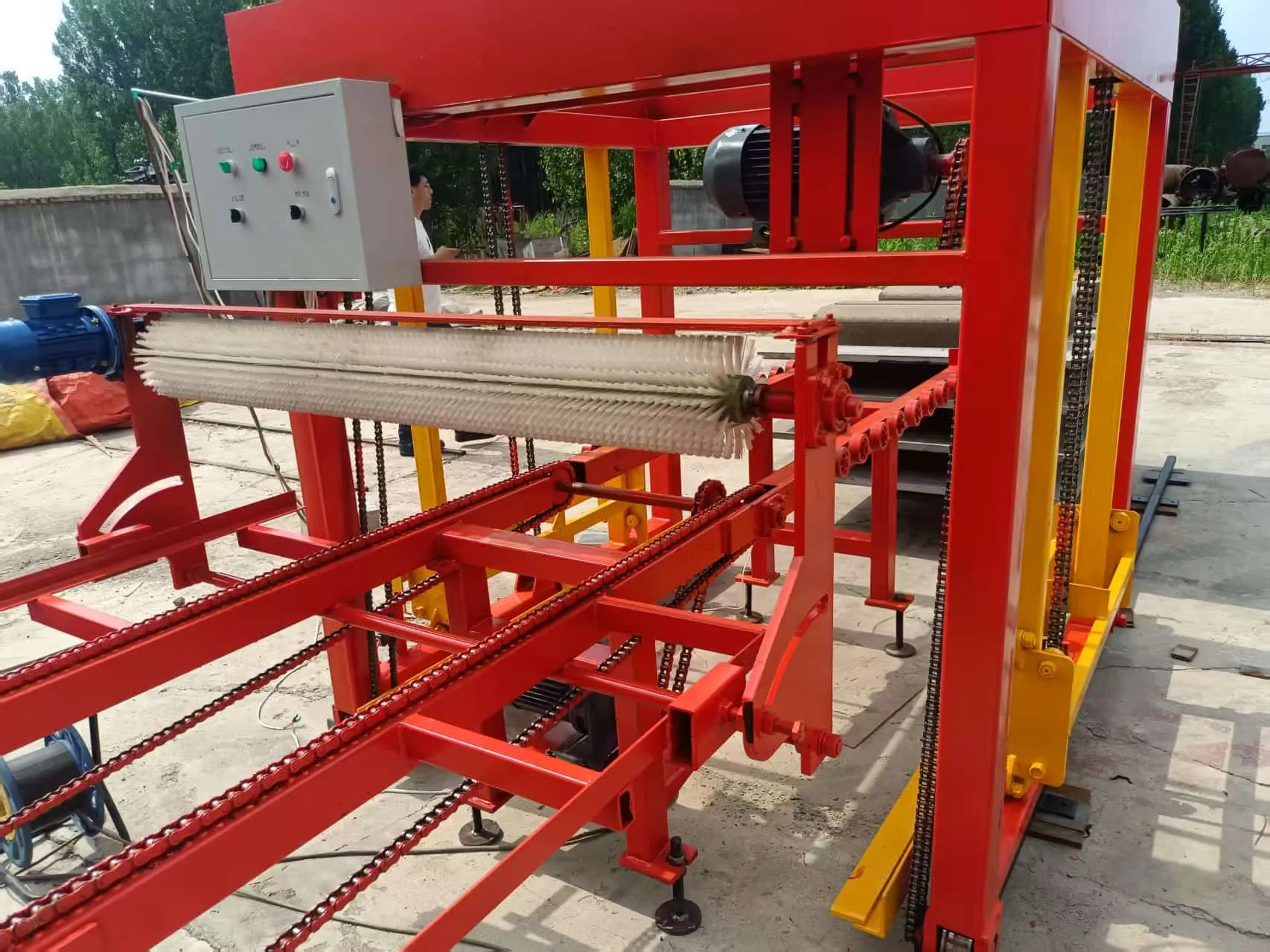
What Is a Hydraulic Brick Making Machine?
Core definition and operational purpose of a hydraulic brick making machine
A hydraulic brick making machine is an industrial press that uses pressurized hydraulic fluid to compact concrete or clay mixtures into high-density, dimensionally precise bricks. By converting hydraulic energy into controlled mechanical force, it compresses raw materials inside a steel mold—eliminating air voids and moisture inconsistencies. The result is uniform bricks with superior structural strength, consistent compressive strength (typically 15 MPa), and dimensional accuracy within ±0.5 mm. Widely adopted in modern block plants, this technology enables efficient mass production of solid blocks, hollow blocks, and interlocking pavers—delivering faster throughput, reduced labor dependency, and batch-to-batch quality assurance aligned with national construction standards like IS 2116 (India) or ASTM C1319 (USA).
Key differentiators from manual, mechanical, pneumatic, and servo-electric brick machines
Manual brick machines rely on operator force, yielding inconsistent density, low output, and frequent nonconformance with strength requirements. Mechanical presses use cam-and-flywheel systems that generate moderate pressure but suffer from mechanical wear, vibration-induced inaccuracies, and limited control over dwell time. Pneumatic machines lack the sustained high-force capability needed for dense, load-bearing bricks—maxing out around 5–7 MPa with significant pressure decay during compression. Servo-electric systems offer excellent motion precision but rarely exceed 10 MPa in continuous pressing force and face thermal limitations under heavy-duty cycles. In contrast, hydraulic brick making machines deliver steady, programmable pressure between 12–25 MPa across the full stroke—a range validated by ISO 7940 and widely specified in industrial procurement guidelines. This force is distributed uniformly across the mold surface, preventing weak zones, while seamless integration with PLC-based automation ensures cycle repeatability within ±0.5%, far exceeding the tolerance capabilities of non-hydraulic alternatives.
How a Hydraulic Brick Making Machine Works: The Pressure-to-Precision Process
Pascal’s law in practice: how hydraulic force enables consistent high-pressure compaction
Pascal’s law—the principle that pressure applied to an enclosed fluid transmits equally in all directions—forms the scientific foundation of hydraulic brick making. The machine applies force via a hydraulic cylinder, translating pump-generated oil pressure into uniform, omnidirectional compaction across the entire mold cavity. This eliminates localized stress concentrations and air entrapment, producing bricks with homogeneous density and predictable compressive strength. Unlike mechanical or pneumatic systems where force distribution varies with stroke position or air compressibility, hydraulic actuation maintains stable pressure throughout the full compression phase—ensuring every brick meets stringent performance benchmarks such as IS 2116 for compressive strength or EN 771-3 for dimensional stability.
Four-stage forming cycle: feeding, pre-compression, main pressing (12–25 MPa), and controlled ejection
The forming process follows a tightly synchronized four-stage sequence governed by a programmable logic controller (PLC):
Feeding: Volumetric dispensers meter precise proportions of cement, sand, aggregate, and water into the mold cavity—minimizing material variance and optimizing mix consistency.
Pre-compression: A low-force stroke (2–4 MPa) gently consolidates the green mix, expelling entrapped air and initiating particle interlocking without premature densification.
Main pressing: The primary hydraulic ram applies calibrated pressure (12–25 MPa) over a defined dwell time—achieving target density, eliminating micro-voids, and delivering compressive strength above 15 MPa in cured products.
Controlled ejection: Dual-acting hydraulic actuators retract punch plates in synchronized motion, releasing the formed brick with dimensional accuracy of ±0.5 mm and zero surface distortion.
This fully automated cycle repeats every 12–18 seconds—balancing high output with uncompromised quality, and supporting production rates up to 12,000 bricks per 8-hour shift.
Critical Components Enabling Reliable Hydraulic Brick Production
High-strength mold, precision punch plate, and hydraulic actuation system integration
Reliability stems from the synergistic integration of three core components: the mold, punch plate, and hydraulic actuation system. High-strength alloy steel molds—heat-treated to HRC 58–62—resist abrasion from fly ash, crushed stone, or slag-based mixes, preserving cavity geometry over 100,000+ cycles. Precision-ground punch plates ensure even force transmission across the entire surface area, preventing edge cracking or density gradients. The hydraulic actuation system features a variable-displacement piston pump paired with proportional pressure-control valves, enabling real-time regulation of oil flow and pressure delivery (12–18 MPa). This triad replaces the variability inherent in manual tamping or pneumatic cycling—directly supporting compliance with ISO 9001 quality management protocols and reducing rejection rates to under 0.8%.
PLC-controlled automation: ensuring cycle repeatability ±0.5% and real-time pressure monitoring
A robust PLC serves as the central nervous system—orchestrating feeding, compression timing, pressure ramping, and ejection with ±0.5% cycle repeatability. Integrated pressure transducers continuously monitor hydraulic line pressure; if readings deviate from setpoints (e.g., due to fluctuating moisture content or aggregate gradation), the PLC dynamically adjusts valve opening duration or dwell time to maintain target density. This closed-loop responsiveness prevents under-compacted or over-pressed units before they enter curing. System logs capture cycle-by-cycle performance metrics—including peak pressure, dwell duration, and ejection force—enabling predictive maintenance scheduling and root-cause analysis for quality deviations. For contractors and certification bodies, this traceability supports audit-ready documentation aligned with ISO 14001 environmental standards and BIS certification requirements.
Energy Efficiency and Sustainability Advantages of Hydraulic Brick Making Machines
Hydraulic brick making machines achieve 25–40% higher energy conversion efficiency than mechanical counterparts—thanks to optimized variable-displacement pumps, regenerative circuits, and minimal mechanical friction losses. Their closed-loop hydraulic design reduces oil consumption and virtually eliminates leakage risk, safeguarding soil and groundwater integrity. Precise pressure control (12–25 MPa) ensures optimal material consolidation with no overuse of cementitious binders—cutting embodied carbon per unit by up to 12% compared to conventional methods. Advanced models integrate water recycling systems that reclaim and filter up to 70% of process water, significantly lowering freshwater demand. Moreover, bricks produced under consistent high pressure exhibit enhanced durability—extending service life by decades and reducing long-term replacement emissions. These combined advantages make hydraulic systems the benchmark for sustainable, high-performance brick manufacturing—endorsed by the Global Green Building Council and referenced in India’s National Action Plan on Climate Change for resource-efficient construction.
FAQ Section
What is a hydraulic brick making machine?
A hydraulic brick making machine is an industrial tool that uses hydraulic pressure to compress concrete or clay mixtures into high-density bricks with superior strength and precision.
How does it differ from other types of brick machines?
Hydraulic machines provide greater, more consistent pressure (12–25 MPa), ensuring uniform quality compared to manual, mechanical, or pneumatic alternatives. They also integrate automation and precise controls for superior brick production.
What are the main parts of a hydraulic brick making machine?
Key components include high-strength molds, precision punch plates, and a hydraulic actuation system, all coordinated by a PLC for automated control and real-time pressure monitoring.
How does Pascal's law apply to these machines?
Pascal’s law ensures that hydraulic force is distributed evenly across the mold, enabling uniform compaction, eliminating air voids, and producing bricks with consistent density and strength.
What are the energy efficiency benefits?
Hydraulic brick machines are 25–40% more energy-efficient than mechanical machines and minimize material waste, reduce embodied carbon, and offer water recycling capabilities for sustainable production.