 EN
EN

How Automatic Concrete Block Making Machines Reduce Energy Consumption
VFD-Driven Hydraulic and Vibratory Systems Cut Peak Load by Up to 35%
The latest automatic concrete block making machine incorporates variable frequency drives (VFDs) for better control over hydraulic pressure and how intense the vibrations are during operation. These VFD systems work by changing the motor speed as needed based on what the production line actually requires at any given moment. When there's not much going on or when loads are light, they stop wasting energy that would otherwise go unused. According to research published in the International Journal of Sustainable Engineering back in 2023, this approach cuts down on peak power consumption by around 35% compared to older fixed speed setups. There are several benefits worth mentioning here.
- Consistent, energy-efficient ramming that maintains optimal block density
- Smooth motor starts and stops, avoiding consumption spikes from abrupt acceleration
- Adaptive vibration frequency tuned to material viscosity—maximizing compaction while minimizing runtime
Smart Controls and IoT Integration Enable Real-Time Energy Load Balancing
Integrated IoT sensors and cloud-based analytics platforms allow machines to dynamically balance energy across feeding, compaction, and curing stages. This intelligent coordination achieves:
- 20–25% lower kWh per block, driven by synchronized cycle timing and reduced overlap in high-power operations
- Predictive power management that shifts energy-intensive tasks away from grid peak tariff windows
- Continuous improvement via machine learning models trained on historical energy usage patterns
Live dashboards give operators visibility into subsystem-level energy allocation, enabling rapid, data-informed adjustments. Verified case studies show plants realizing an average of 22% annual energy savings through these capabilities (Construction Automation Review, 2024).
Key Energy-Saving Innovations in Modern Automatic Concrete Block Making Machines
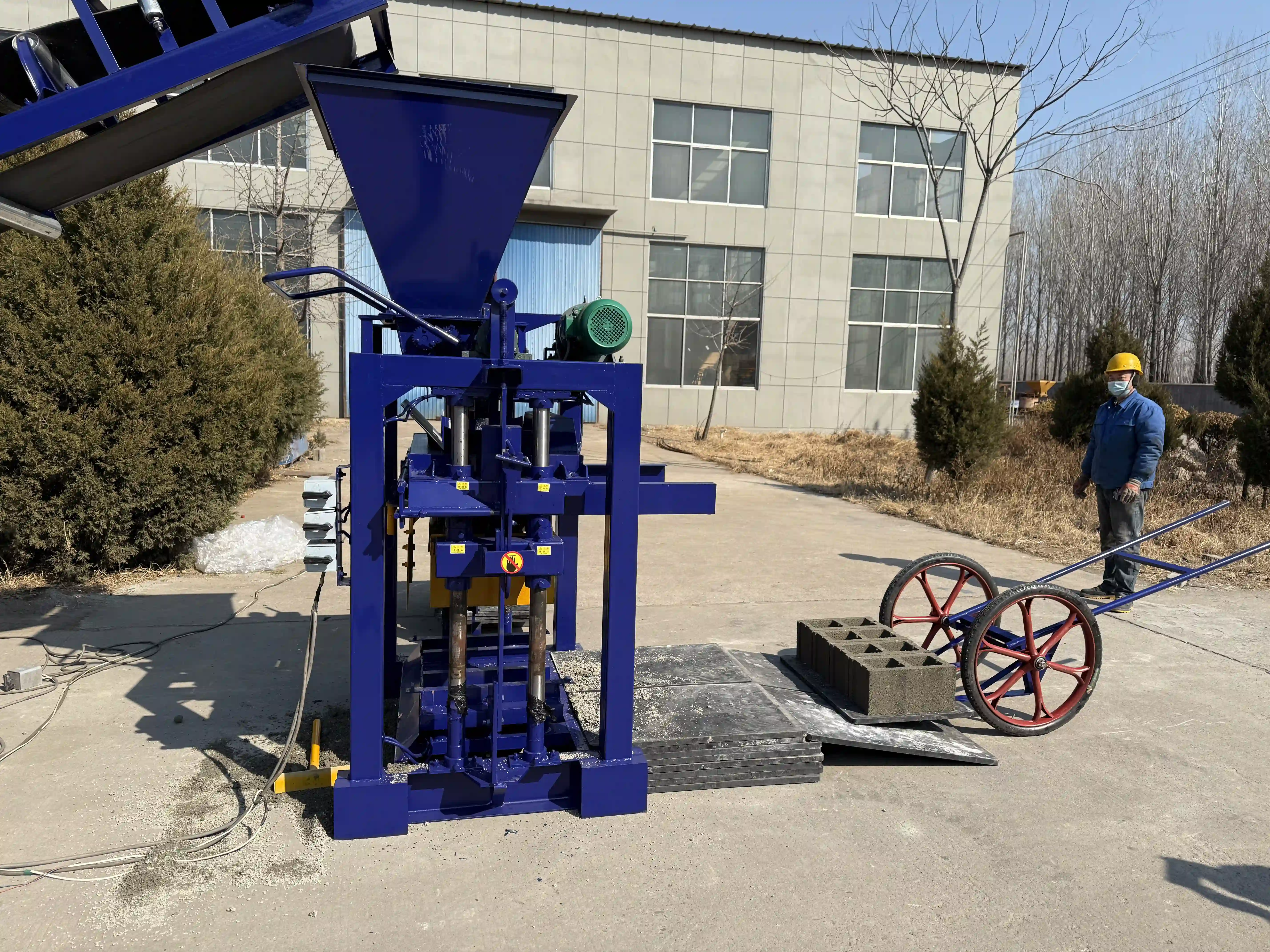
Adaptive Vibration via Sensor-Triggered Cycle Optimization
Sensors built right into the equipment keep track of how consistent the material is and when the mold gets filled up during production. These sensors then make fine adjustments to vibrations throughout each manufacturing cycle. The result? Motors don’t run needlessly anymore, which means better compaction across all products and cuts down on wasted energy somewhere around 15 to 20 percent. According to research published last year, facilities adopting these smart systems saw their energy bill drop by just three cents per block produced. That might not sound like much until you calculate it out over a whole year at a medium sized plant where savings hit about $162k annually. What makes this technology really stand out though is how it handles those pesky harmonic losses that plague older fixed frequency setups, something many factory managers have struggled with for years.
Modular, Scalable Designs That Improve Energy Efficiency Per Block by 22–28%
With modular setups, companies can scale production while keeping energy costs under control. Workers just turn on what they need for each job mixing station here, mold there, maybe some curing somewhere else so nothing sits idle all day long. The new servo motors that handle specific tasks have replaced those old central drive systems which were basically energy hogs. This alone cuts down on basic power consumption around 35 percent give or take. Add in those heat recovery systems grabbing waste warmth from curing areas and efficiency jumps another 22 to maybe 30 percent depending on conditions. All these modules talk to each other through IoT tech too, smartly balancing workloads across the factory floor. Industry experts predict this could cut energy usage across construction by about a quarter by mid 2026 according to last year’s Global Construction Tech Report findings.
Table: Impact of Modular Design on Energy Efficiency
| Design Feature | Energy Reduction | Implementation Benefit |
|---|---|---|
| Task-Specific Servos | 35% peak load | Eliminates centralized power waste |
| Selective Station Activation | 18% runtime | Reduces idle equipment consumption |
| Integrated Heat Recovery | 40% thermal reuse | Recaptures curing chamber energy |
Operational Best Practices to Maximize Energy Efficiency
Preventive Maintenance Protocols for Sustained Motor and Drive Efficiency
Consistent preventive maintenance is critical to preserving the energy-saving benefits engineered into modern machines. Standardized protocols deliver measurable, sustained gains:
- Lubrication schedules: Quarterly replenishment of hydraulic fluids and greases—using manufacturer-specified grades—reduces motor friction by 12–18%
- Laser alignment checks: Biannual verification and correction of drive alignment prevent vibration-induced energy losses
- Vibration analysis: Monthly monitoring detects early-stage bearing wear before efficiency degrades
- Thermal scanning: Quarterly infrared inspections identify high-resistance electrical connections, preventing 7–9% energy leakage
Plants with documented, consistently applied maintenance programs achieve 15% lower power consumption for equivalent output—and energy audits confirm a 22% reduction in motor-related energy use versus reactive maintenance approaches.
Frequently Asked Questions
What advancements in automatic concrete block making machines help reduce energy consumption?
Modern machines use variable frequency drives, IoT integration, and adaptive vibration technology to optimize energy usage.
How do IoT and smart controls contribute to energy savings?
They enable real-time energy load balancing and predictive power management, reducing energy consumption during peak tariff times.
How significant are the cost savings from using modern block making machines?
Facility savings can reach about 22% in annual energy costs, roughly $162k annually for medium-sized plants.