
 EN
EN
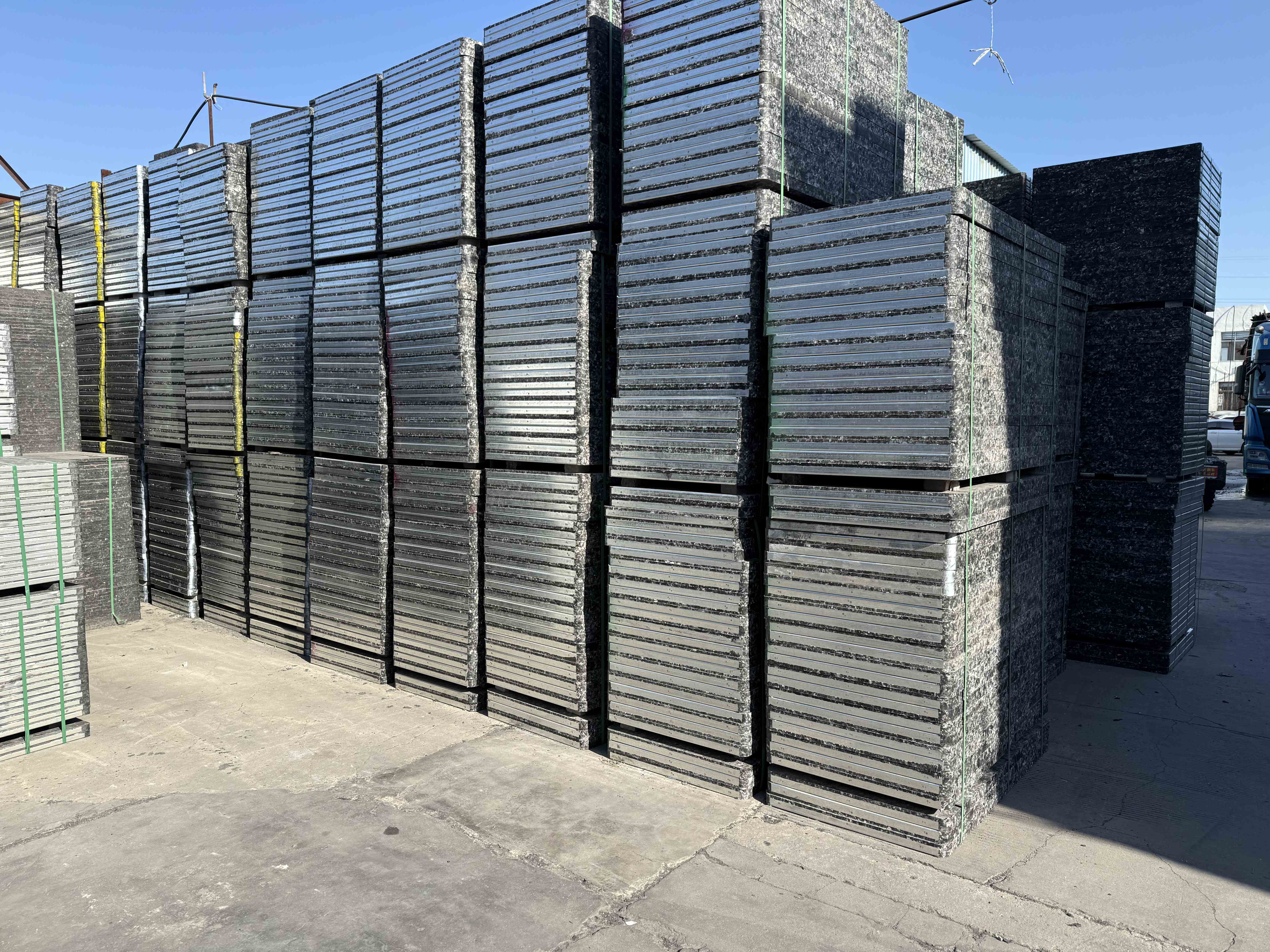
Material Performance: Why Glass Fiber GMT Outperforms PVC for Brick Pallet Applications
Elastic Modulus and Compression Load-Bearing Capacity in High-Pressure Brick Pressing
Glass fiber GMT pallets deliver exceptional structural performance in high-pressure brick pressing, with an elastic modulus of 3.7 GPa—40% higher than standard PVC alternatives. This translates directly into superior resistance to deformation under typical molding pressures of 2,500–3,500 psi, preserving dimensional accuracy across production batches. Unlike thermoplastic polymers, the three-dimensional fiber-resin matrix distributes stress efficiently, reinforcing critical load zones without plastic flow or creep.
Rigidity–Toughness Balance Under Dynamic Cycling: Minimizing Deformation and Crack Propagation
GMT technology achieves a rare balance of rigidity and toughness essential for automated, high-cycle brick lines. After 50,000 dynamic loading cycles—representing over two years of continuous 24/7 operation—glass fiber pallets exhibit 72% less permanent deformation than PVC. Their interlaced fiber architecture actively arrests micro-fracture propagation, preventing localized damage from escalating into structural failure. Field data from multiple block plants show a 63% reduction in unscheduled stops related to pallet degradation following the switch to GMT.
Thermal Stability and Dimensional Consistency Across 40–80°C Production Environments
In curing chambers where temperatures routinely cycle between 40°C and 80°C, dimensional stability is non-negotiable. Glass fiber GMT pallets expand by just 0.12% over this range—15× less than PVC’s 1.8% thermal shift. This fidelity ensures consistent brick geometry, reducing scrap rates by up to 17% in real-world operations. Combined with near-zero moisture absorption (<0.3% by weight), the composite resists warping in humid environments where PVC pallets often require replacement every week.
Long-Term Durability: 10-Year Service Life of Glass Fiber Brick Pallets vs. PVC Degradation
Accelerated Aging Results: UV Exposure, Moisture Absorption, and Thermal Cycling Effects
Accelerated aging tests confirm the long-term resilience of glass fiber GMT. After 2,000 hours of UV exposure—equivalent to ~5 years of outdoor storage—GMT pallets retain over 95% of their original flexural strength, while PVC shows surface cracking and embrittlement. Under thermal cycling (40°C ↔ 80°C), GMT maintains dimensional stability within ±0.1 mm; PVC exhibits measurable creep and irreversible warping after only 500 cycles. These outcomes reflect the inherent stability of the glass-fiber-reinforced thermoplastic matrix and validate its design for a full 10-year service life in demanding industrial settings.
Field-Validated Reliability: MTBF Data from Automated Brick Plants Using Glass Fiber Brick Pallets
Mean time between failures (MTBF) from automated brick facilities using glass fiber pallets consistently exceeds 15,000 operating hours—more than triple the 3,000–5,000-hour MTBF typical of PVC in identical conditions. Failures in PVC pallets stem primarily from thermal creep, impact-induced cracking, and alkaline degradation—all mitigated by GMT’s composite architecture. As a result, plant managers report a 60% reduction in annual maintenance interventions and elimination of the gradual loss of brick dimensional accuracy associated with PVC wear. This field-proven reliability forms the basis of the manufacturer’s 10-year warranty and positions GMT as the benchmark for continuous, high-pressure block production.
Operational Performance in Brick/Block Making Machinery
Wear Resistance and Surface Integrity After 50,000+ Cycles on Hydraulic and Rotary Press Lines
Glass fiber GMT pallets maintain surface integrity and dimensional precision after 50,000+ cycles on both hydraulic and rotary press lines—far exceeding the functional lifespan of PVC. The GMT composite resists abrasion, impact-induced pitting, and edge chipping under repeated high-pressure contact with molds and conveyors. In contrast, PVC pallets develop surface cracks and material loss within the same cycle count, triggering alignment issues, inconsistent brick release, and rising scrap rates.
Chemical Resistance to Cement Slurry, Release Agents, and Alkaline Cleaning Solutions
Block plants subject pallets to aggressive chemical exposure—including highly alkaline cement slurry (pH 12), hydrocarbon-based release agents, and caustic cleaning solutions. PVC gradually softens, swells, and loses surface hardness under these conditions, compromising dimensional control and risking contamination of fresh bricks. Glass fiber GMT, however, shows no measurable reaction to alkalis or common solvents. Its inert, fiber-stabilized surface remains intact, enabling longer cleaning intervals, reduced downtime, and consistent performance across shifts and seasons.
FAQ
Why are glass fiber GMT pallets more durable than PVC?
Glass fiber GMT pallets resist deformation, thermal expansion, UV exposure, and chemical degradation thanks to their fiber-reinforced resin matrix. This durability extends their service life to over 10 years.
How do glass fiber GMT pallets perform under high-pressure conditions?
They have an elastic modulus of 3.7 GPa, 40% higher than PVC, enabling superior compression load-bearing capacity and dimensional stability under 2,500–3,500 psi molding pressures.
Can glass fiber GMT pallets withstand extreme temperatures?
Yes, they maintain dimensional consistency across 40–80°C environments, expanding only 0.12%, compared to PVC's 1.8%, ensuring reduced scrap rates and consistent production quality.
Are glass fiber GMT pallets suitable for chemically aggressive environments?
Absolutely. They show no measurable reaction to alkaline cement slurry, release agents, or caustic cleaning solutions, unlike PVC, which softens and deteriorates under chemical exposure.