
 EN
EN
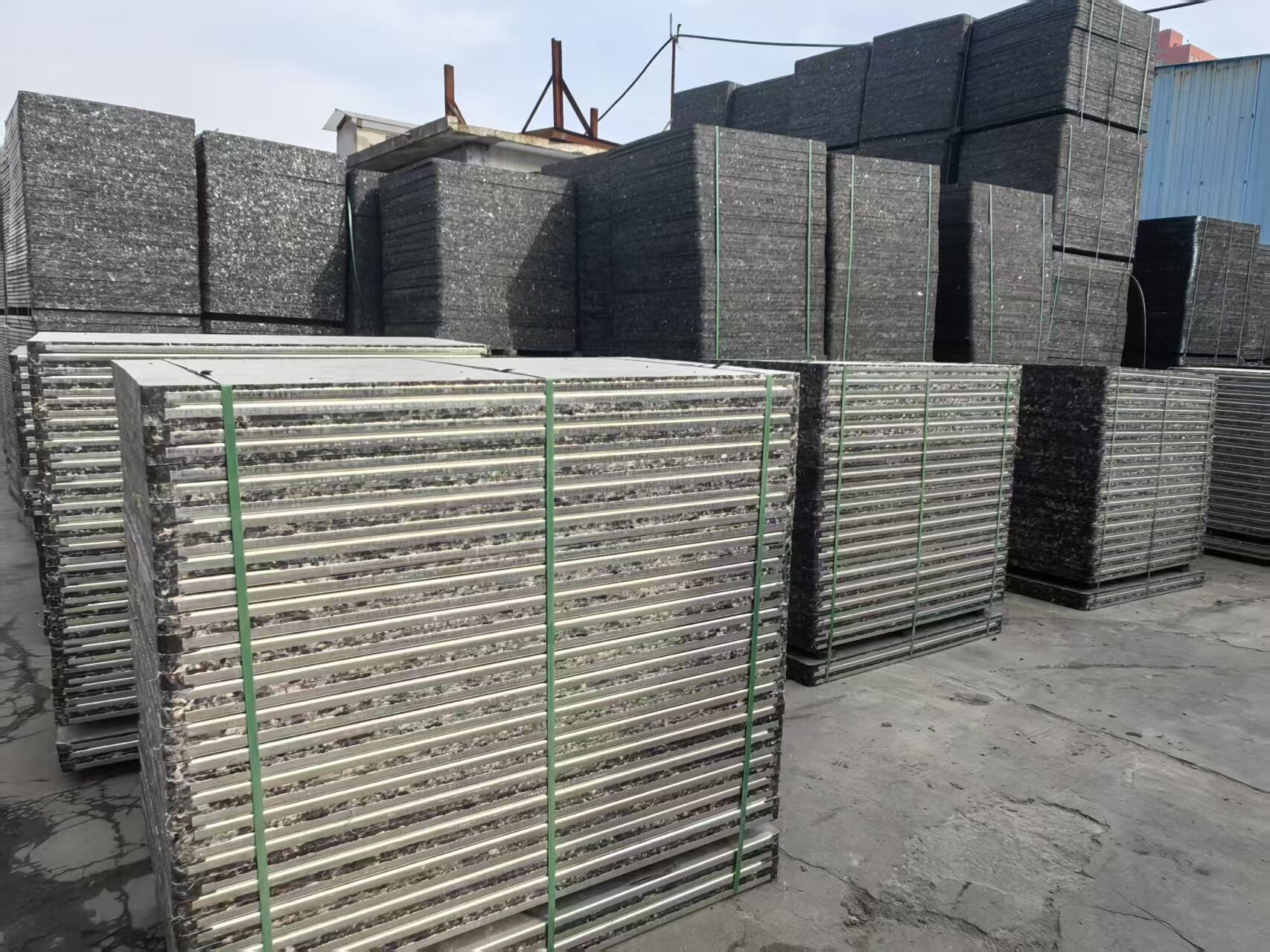
Why GMT Glass Fiber Pallets Outperform Alternatives in High-Output Brick Production
Structural Integrity Under Continuous Thermal and Mechanical Stress
GMT glass fiber pallets deliver unmatched structural stability in demanding brick production environments. With an elastic modulus of 22–26 GPa—more than triple that of standard hardwood—they resist deflection under static loads exceeding 12,000 kg. During continuous operation under vibration and pressure from brick machines, surface wear remains minimal at just 0.5 mm after 100 minutes. Crucially, GMT maintains integrity across a broad thermal range (–20°C to +80°C), remaining dimensionally stable in steam-curing zones where plastic pallets often deform above 60°C. This combination of high rigidity and thermal resilience prevents warping or cracking, directly reducing damage to green bricks during handling and curing.
Fatigue Life Comparison: GMT vs. Wood, Steel, and Plastic Brick Pallets
GMT pallets outlast conventional options by a wide margin: they sustain over 7 years of continuous high-output use. In contrast, hardwood pallets typically fail within 1–2 years due to moisture absorption, splitting, and fungal decay. Steel pallets—though strong—are vulnerable to corrosion in high-humidity curing chambers (up to 95% RH), while PVC and other thermoplastic pallets degrade after just 2–3 years, losing impact resistance and becoming brittle under repeated thermal cycling. GMT’s impact strength exceeds 30 kJ/m², more than double that of PVC (15 kJ/m²), allowing it to absorb drop-hammer impacts that fracture plastic alternatives. This fatigue resistance translates into fewer unplanned replacements, reduced maintenance labor, and sustained line uptime.
Critical Material Properties for Reliable Brick Pallet Performance
Corrosion Resistance in Alkaline, High-Humidity Clay Environments
Brick manufacturing exposes pallets to aggressive conditions: alkaline clay slurries, saturated steam, and prolonged high humidity. Wooden pallets swell, rot, and foster mold; steel corrodes rapidly in such environments. GMT glass fiber pallets resist alkalis, salts, and moisture with a water absorption rate below 0.5%, and operate reliably from –40°C to 90°C. This inertness eliminates rust, rot, and chemical degradation—preserving load-bearing capacity and dimensional fidelity over years of service. As a result, manufacturers experience fewer mid-shift failures, lower inspection frequency, and predictable maintenance planning.
Impact Resistance During Automated Demolding and Conveyor Transfer
Automated demolding, ejection, and high-speed conveyor transfers subject pallets to repetitive mechanical shock. Wood and standard plastic pallets frequently crack, splinter, or deform under these forces—causing misfeeds, brick breakage, and unplanned stoppages. GMT pallets withstand this abuse with impact resistance ≥30 kJ/m², absorbing energy without permanent deformation. Their tough, homogeneous structure prevents edge chipping and surface microcracking across thousands of cycles, ensuring consistent robotic grip and precise brick placement. This durability protects both finished products and downstream equipment—reducing downtime and extending the service life of conveyors, stackers, and demolding presses.
Precision Integration of GMT Brick Pallets into Automated Production Systems
Dimensional Stability and Tolerance Consistency for Robotic Handling
For seamless integration with Industry 4.0 automation, pallets must hold tight tolerances under real-world production stresses. GMT pallets maintain dimensional accuracy within ±0.5 mm—even after repeated thermal cycling and mechanical loading—thanks to their near-zero coefficient of thermal expansion. Unlike wood, which warps unpredictably, GMT retains precise alignment with robotic grippers, conveyor pins, and vision-guided positioning systems. This consistency reduces misalignment-related jams and brick rejection rates by up to 27% in high-output lines. Combined with excellent abrasion resistance, this stability ensures long-term compatibility with automated stacking units, robotic palletizers, and smart conveyor networks.
Total Cost of Ownership: How GMT Brick Pallets Reduce Long-Term Operational Costs
GMT pallets deliver compelling lifecycle economics. They last 3.2× longer than conventional plastic pallets—cutting replacement frequency by 76% and slashing procurement and logistics overhead. According to the European Brick Association’s 2024 benchmark study, manufacturers realize annual operational savings of 42% versus PVC pallets and 58% versus untreated wood. These gains stem not only from extended service life but also from reduced brick damage (enabled by high stiffness and impact absorption), lower maintenance labor, and elimination of landfill disposal fees—since GMT composites are fully recyclable at end-of-life. When factoring in minimized line interruptions, preserved equipment longevity, and consistent product quality, GMT pallets consistently deliver the lowest total cost of ownership across high-output brick production facilities.
FAQ
What makes GMT glass fiber pallets suitable for brick production?
GMT pallets offer high rigidity, thermal stability, corrosion resistance, and superior impact strength. These properties ensure durability and reliable performance in demanding brick production environments.
What is the expected lifespan of GMT pallets compared to other materials?
GMT pallets typically last over 7 years, whereas hardwood, steel, and plastic pallets often fail within 1–3 years depending on conditions.
How do GMT pallets reduce damage to bricks during handling?
With high stiffness and minimal deflection, GMT pallets avoid warping and cracking, preventing damage to green bricks during manufacturing, handling, and curing processes.
Are GMT pallets compatible with automated production systems?
Yes, GMT pallets offer precise dimensional stability and maintain tight tolerances for seamless integration with robotic handling systems.
Can GMT pallets withstand challenging environmental conditions?
GMT pallets resist alkalis, moisture, and elevated temperatures, allowing reliable performance in alkaline clay environments and high-humidity conditions.
Table of Contents
- Why GMT Glass Fiber Pallets Outperform Alternatives in High-Output Brick Production
- Critical Material Properties for Reliable Brick Pallet Performance
- Precision Integration of GMT Brick Pallets into Automated Production Systems
- Total Cost of Ownership: How GMT Brick Pallets Reduce Long-Term Operational Costs
-
FAQ
- What makes GMT glass fiber pallets suitable for brick production?
- What is the expected lifespan of GMT pallets compared to other materials?
- How do GMT pallets reduce damage to bricks during handling?
- Are GMT pallets compatible with automated production systems?
- Can GMT pallets withstand challenging environmental conditions?