
 EN



Why Pallet Choice Deserves a Second Look
Automatic block machines get most of the attention. Hydraulic pressure, vibration frequency, cycle time, and mixer consistency all matter. Yet the humble brick pallet is often the weakest link in the chain. A machine can be perfectly tuned and still produce scrap if the pallet underneath the mold is warped, wet, or worn out. That fact tends to surface the hard way, usually during a rush order when downtime costs the most.
For years, wood was the default brick pallet material. It was cheap, easy to cut, and light enough for one person to carry. The trade-off was a short service life and unpredictable behavior in humid climates. Fiberglass pallets emerged as a practical answer for producers who were tired of replacing boards every few months.
What Glass Fiber Brings to the Table
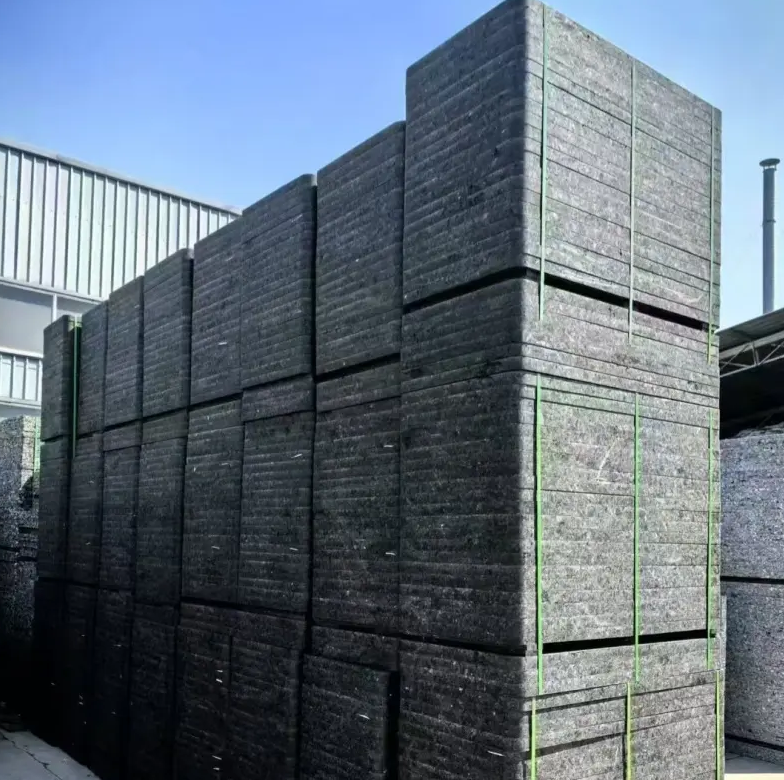
A fiberglass pallet is a composite board. Glass fiber reinforcement is bonded in a resin matrix, usually under heat and pressure. The finished board has a smooth, non-porous surface, high stiffness, and very low water absorption. Those properties matter because a pallet in an automatic line is not just sitting still. It is moving, vibrating, receiving fresh concrete, and then traveling into a curing environment.
The material also resists many of the chemicals found in concrete admixtures and release agents. That resistance helps the pallet keep its dimensions over thousands of cycles. Wood swells when it gets wet, then shrinks as it dries. That repeated movement eventually breaks down the wood fibers. Glass fiber composite does not behave that way. Moisture uptake stays under 0.5 percent in most quality boards, which is a different world from the 12 to 20 percent moisture content common in untreated wood.
How Fiberglass Stacks Up Against Wood and Steel
The comparison below uses typical values from published material data and standard test methods such as ASTM D570 for water absorption.
| Factor | Wood | Steel | Glass Fiber |
|---|---|---|---|
| Water absorption | 12 to 20% | Near zero, but rusts | Under 0.5% |
| Density | 0.5 to 0.8 g/cm3 | 7.85 g/cm3 | 1.6 to 2.0 g/cm3 |
| Wet and dry dimensional change | High | Very low | Very low |
| Impact response | Cracks and splinters | Dents and bends | Flexes and recovers |
| Handling | Manual | Mechanical | Manual or mechanical |
| Surface effect on fresh block | Can leave fibers | Can scratch | Smooth release |
Steel is strong and stable, but it is heavy and prone to corrosion in wet plants. Wood is light and cheap, but it moves with moisture and fails early. Glass fiber sits between them on cost and weight, while offering dimensional stability closer to steel. The catch is that quality varies. A low-grade fiberglass pallet with poor resin distribution can delaminate or crack, so supplier selection matters as much as material choice. A brick pallet that looks correct on paper can still disappoint if the resin and fiber are not evenly combined.
A Coastal Plant Case That Changed the Maintenance Schedule
A block producer in a coastal region of Southeast Asia ran a semi-automatic line making hollow blocks for local builders. Humidity stayed above 75 percent most of the year. Wooden pallets were being swapped out every four to six weeks. Maintenance crews spent more time chasing pallet failures than checking the machine itself. Blocks were also showing edge damage because splinters from the pallets were sticking to fresh concrete.
The switch to fiberglass brick pallets did not solve every problem overnight. The first batch had to be checked for thickness consistency, and a few boards were set aside because they were outside tolerance. Once the good boards were in rotation, the replacement interval stretched past a year. Edge chipping dropped, and unplanned stops linked to pallet jams became rare. The plant manager did not claim a miracle. The line still needed normal maintenance. The difference was that pallets stopped being the daily emergency.
Matching Brick Pallet Specs to Automatic Machine Behavior
A brick pallet has to fit the machine, not the other way around. Thickness, flatness, edge quality, and surface finish all affect how the automatic cycle runs.
Thickness tolerance should match the machine manual. A board that is off by even a millimeter can cause stacking errors.
Flatness matters more than many buyers expect. A warped pallet produces uneven compaction and weak blocks.
Edge quality affects conveyor wear. Rough edges catch on rollers and guides.
Surface finish controls release. A smooth, sealed face helps the block leave the pallet cleanly.
Stiffness should match the vibration system. Too much flex wastes energy. Too much rigidity can crack under impact.
These details are not marketing points. They are the difference between a line that runs and a line that fights back. A brick pallet with the wrong stiffness can make a good machine look bad.
Sourcing Pallets With Machine Knowledge in Mind
Buying fiberglass pallets from a supplier that also builds block machines tends to reduce guesswork. YAODA has manufactured block making equipment and fiberglass pallets since 1999 from a 16,000 square meter facility in southeastern Shandong. The company employs over 300 people, including 60 technical experts, and exports to Africa, the Middle East, Central Asia, Southeast Asia, Australia, and the Americas. That integrated background helps when a producer needs a brick pallet that matches a specific machine's thickness, stacking pattern, and curing setup. The "Yaoda" brand meets national standards, and the manufacturing operation includes precision machining and testing systems that support consistent pallet quality.