
 EN


Why Semi Automatic Block Machines Still Hold Their Ground
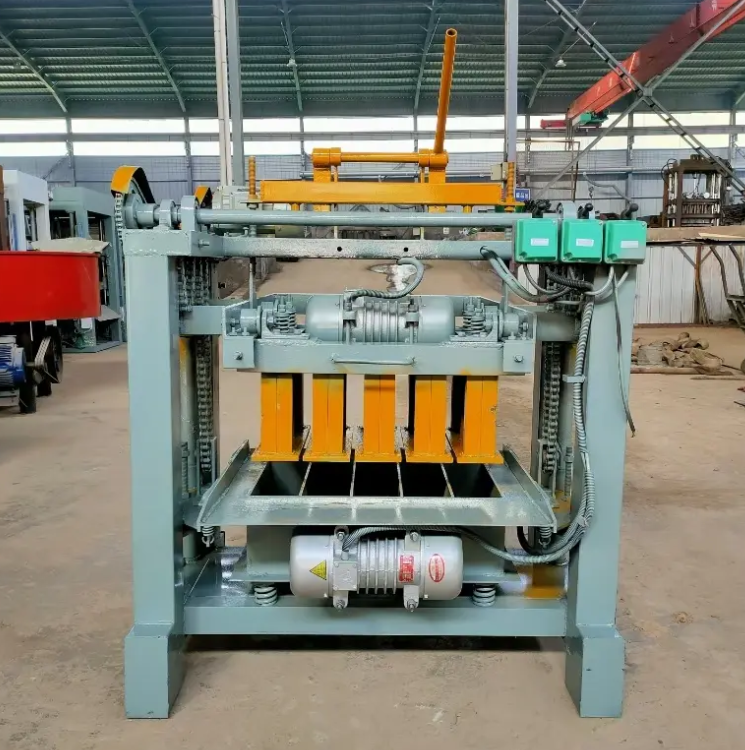
The construction materials industry has a strange relationship with automation. On one side, there is constant pressure to go fully automatic, to remove every human hand from the production line. On the other side, plenty of successful operations around the world run semi automatic brick making machine setups and have no intention of changing that anytime soon.
That gap between industry hype and on-the-ground reality deserves a closer look. A semi automatic block machine is not a compromise or a stepping stone. For many producers, it is the destination.
The logic is straightforward. Full automation brings speed and consistency, but it also demands capital, technical support, and a level of operational discipline that not every business can maintain. A semi automatic setup keeps the operator in the loop for key decisions while automating the parts that benefit most from mechanical precision.
What a Semi Automatic Production Line Actually Delivers
Walk through a working semi automatic block plant and the workflow becomes clear. Material batching and mixing happen in a concrete mixer. The block machine handles forming and compaction. Pallet handling is often manual or semi-mechanized. Curing happens in a separate area, either natural or accelerated.
The operator controls the cycle. They decide when to start the next batch, how to manage pallet flow, and when to adjust vibration or pressure settings. That human judgment matters more than some equipment brochures suggest. A skilled operator can catch inconsistencies early, adjust for moisture variation in the mix, and keep block quality steady in ways that a fully automated system might miss without expensive sensor arrays.
The semi automatic brick making machine shines in operations where production volume matters but does not need to hit the theoretical maximum every hour. A plant producing a few thousand blocks per shift can run efficiently with semi automatic equipment, provided the workflow is organized well.
The Real Cost and Control Trade-Off
Numbers tell part of the story, but not all of it. The table below compares key operational factors between semi automatic and fully automatic block production.
| Factor | Semi Automatic | Fully Automatic |
|---|---|---|
| Initial capital outlay | Moderate | High |
| Operational flexibility | High | Moderate to low |
| Skilled operator dependency | Significant | Lower |
| Maintenance complexity | Manageable | Higher |
| Changeover speed for different molds | Fast | Slower |
| Output consistency | Good with trained crew | Excellent |
| Suitability for varied product mixes | Strong | Limited by programming |
The cost advantage of semi automatic equipment is real, but it comes with a condition. The savings only materialize if the operation has access to reliable labor and someone who understands the machine. That is not always the case, and honest assessments matter more than optimistic projections.
Control, in this context, does not mean remote operation or digital dashboards. It means the ability to make decisions on the floor, in real time, without waiting for a software update or a technician from the equipment supplier.
Where Semi Automatic Equipment Wins
Several scenarios favor semi automatic block production over full automation.
Small to mid-sized operations entering the market. The lower capital requirement reduces risk while the business builds its customer base.
Regions with affordable and trainable labor. The human element becomes an asset rather than a cost burden.
Product lines with frequent changes. Switching between different block sizes, shapes, or mix designs is faster when the operator is directly involved.
Infrastructure constraints. Sites with unreliable power or limited technical support benefit from simpler, more robust equipment.
A case from a project in Southeast Asia illustrates this well. A family-owned operation had been producing blocks with manual equipment for years. Upgrading to a fully automatic line would have required a loan that the business could not comfortably service. Instead, a semi automatic setup was installed. Within months, output doubled, and the owner reported that training two operators to run the new line was easier than expected. The key was matching the equipment to the actual operational reality, not to an idealized version of it.
When Semi Automatic Might Not Be the Right Fit
Honesty matters here. Semi automatic equipment is not the answer for every situation.
Operations aiming for very high output with minimal labor will find the semi automatic model frustrating. Large-scale infrastructure projects with tight deadlines and uniform product requirements often benefit from full automation. And in regions where skilled labor is expensive or difficult to retain, the human dependency of semi automatic production can become a liability rather than a strength.
The decision should come down to a clear-eyed assessment of production targets, labor availability, capital constraints, and the product mix. Equipment suppliers who push one solution for every customer are not doing anyone a favor.
How YAODA Approaches Block Machine Manufacturing
Equipment reliability starts long before the machine reaches the job site. YAODA has been building block-making equipment since 1999 from a 16,000-square-meter facility in southeastern Shandong. The company employs over 300 people, including 60 technical experts, and produces fully automatic, semi automatic, and mobile concrete block machines, along with fiberglass pallets, AAC block machines, and concrete mixers.
The manufacturing focus is on precision and consistency. Machining equipment and testing systems are used to maintain tolerances that matter for long-term performance. The company exports to Africa, the Middle East, Central Asia, Southeast Asia, Australia, and the Americas, which means the equipment has to hold up under a wide range of operating conditions.
For buyers evaluating semi automatic brick making machine options, the practical questions should center on after-sales support, spare parts availability, and whether the supplier understands the local operating environment. YAODA's track record in multiple export markets suggests those boxes get checked.