 EN
EN
Insufficient Hydraulic Pressure Creates Internal Voids and Low Compressive Strength
Hydraulic forming pressure acts as the core driving force to squeeze mixed aggregate raw materials into dense unified block structures, and inadequate thrust leaves tiny interconnected air voids inside finished bricks, a quality defect clearly defined under GB/T 4111 concrete brick physical testing standards. When forming pressure fails to reach the matching threshold for aggregate gradation, cement mortar cannot fully wrap sand and stone particles, leaving hollow gaps distributed across brick internal layers. These hidden cavities drastically lower overall compressive strength and weaken resistance to freeze thaw cycles after outdoor installation. A small semi-automatic block plant long term operation record delivers obvious practical comparison. The factory’s outdated hydraulic station could not maintain stable forming thrust, and regular batch sampling tests showed large proportions of bricks failing standard compressive strength inspection, generating continuous waste material expenditure and delayed delivery schedules. Professional forming engineers add that under low hydraulic pressure, finished bricks also develop loose edge structures that chip easily during transportation and stacking before curing cycles complete.
Excessive Hydraulic Pressure Triggers Raw Material Segregation and Surface Defects
Over calibrated hydraulic thrust brings a separate set of irreversible brick quality issues by separating mixed raw material components, an inspection benchmark outlined within EN 771 European concrete masonry unit specifications. Each brick raw material blend carries matched ratios of coarse stone fine sand cement and water, and overly strong hydraulic squeeze pushes heavy coarse aggregate downward while floating thin cement slurry to upper mold layers. This segregation creates inconsistent internal composition, with bottom brick sections dense and top surfaces thin slurry prone to cracking after curing. One block processing workshop shared production records after operators manually raised hydraulic pressure without technical guidance. Continuous batches of solid and hollow bricks displayed visible surface fissures and uneven color layers, failing third party construction material acceptance audits. Even with qualified aggregate formulas, unregulated maximum hydraulic pressure destroys raw material mixing balance and raises overall product rejection rates.
Stable Continuous Hydraulic Output Ensures Uniform Batch Brick Density
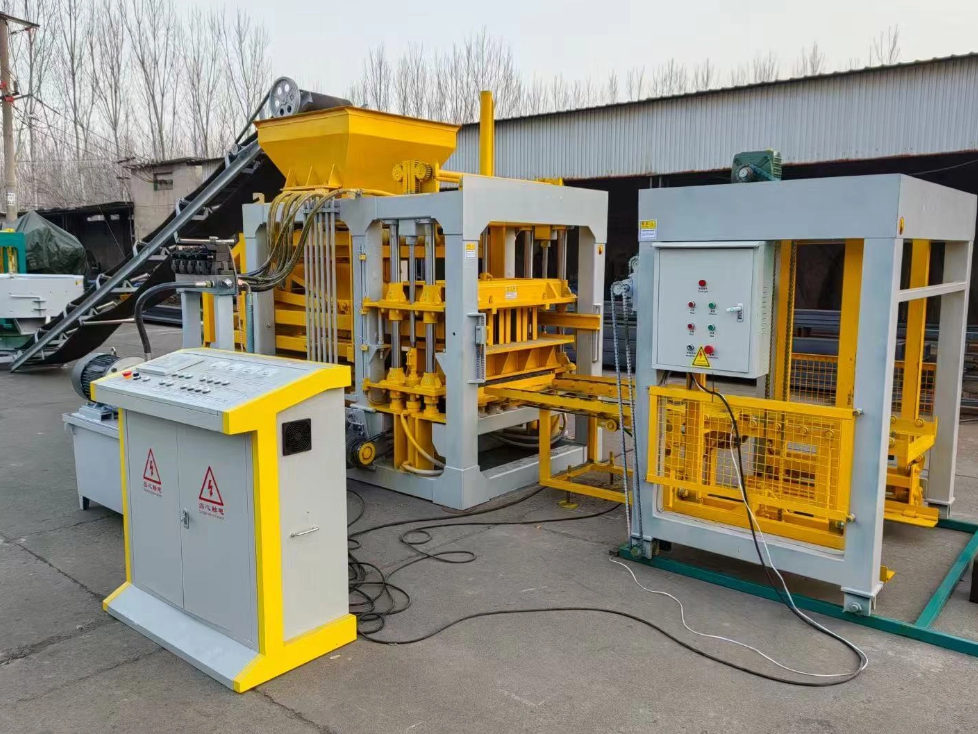
Closed loop proportional hydraulic control systems deliver steady consistent forming thrust throughout every mold pressing cycle, eliminating density gaps between individual bricks within single production batches. Premium block machines adopt Yuken integrated proportional hydraulic valves paired with Albert main oil pumps, which adjust real time pressure output according to aggregate fluidity signals transmitted by PLC control modules. This synchronized hydraulic structure avoids random thrust ups and downs seen on simple fixed pressure hydraulic stations. Long term quality tracking data collected from fully automatic QT series hydraulic block lines shows uniform density distribution across thousands of finished bricks produced daily. Brick compressive strength test results maintain narrow fluctuation ranges, which simplifies construction project material acceptance and avoids batch classification sorting labor for block plant operators. Steady hydraulic pressure also standardizes brick dimensional tolerance within industry recognized narrow limits for smooth wall laying construction.
Reasonable Pressure Holding Time Optimizes Internal Cement Bonding Strength
Pure instantaneous hydraulic compression cannot complete full cement aggregate bonding reaction, and standardized pressure dwell time forms an indispensable supplementary hydraulic function for reliable brick mechanical performance. After hydraulic cylinders reach target forming pressure, controlled temporary thrust retention gives cement slurry sufficient time to fill micro gaps between solid particles and form integrated adhesive networks. Laboratory comparison test records from block material research facilities display clear performance gaps between short dwell and calibrated dwell parameter groups. Bricks formed with inadequate pressure holding cycles show reduced inter particle adhesion and develop internal splitting after medium load impact during stacking. Intelligent hydraulic block machines integrate adjustable dwell timing programs synchronized with pressure output values, allowing technicians to match holding periods to different raw material moisture and aggregate grain sizes flexibly.
Unstable Hydraulic System Fluctuation Leads To Uneven Batch Quality
Aging hydraulic pumps internal valve blockages oil leakage and insufficient oil cooling all trigger unregulated pressure oscillation during brick forming cycles, creating inconsistent quality across whole production runs. Simple open loop hydraulic stations without digital pressure monitoring lack automatic compensation mechanisms to offset component wear induced thrust decline. Daily hydraulic system maintenance checklists compiled by block equipment specialists cover oil level temperature filter cleanliness and cylinder sealing inspection items to prevent random pressure drift. Two parallel production lines running identical raw material formulas deliver stark contrast results. The workshop equipped with aging uncalibrated hydraulic hardware recorded wide compressive strength deviation between morning and afternoon brick batches, while modern integrated hydraulic units with real time pressure feedback maintained consistent finished brick quality across all daily production shifts. Irregular hydraulic fluctuation also expands dimensional error ranges and raises post curing surface defect ratios.
Customized Intelligent Hydraulic Block Machine Delivers Consistent Brick Quality
Block plant operators targeting stable long term finished brick physical indicators need forming equipment with adjustable intelligent hydraulic control systems tailored to local aggregate conditions, comprehensive hydraulic matching advantages fully delivered by Yaoda built upon twenty six years dedicated concrete block machine research and mass production experience. The brand develops full QT series semi automatic and fully automatic hydraulic forming equipment, adopting globally recognized Albert hydraulic main pumps and Yuken proportional control valves coordinated with Siemens PLC closed loop pressure regulation modules. In house hydraulic engineering teams adjust maximum forming pressure and pressure holding dwell parameters on a customized basis according to clients local sand stone aggregate moisture and gradation characteristics, eliminating unqualified brick risks caused by mismatched fixed hydraulic settings. Mature overseas service teams provide on site hydraulic system installation debugging and periodic calibration guidance for cross border block factory projects, alongside stable long term supply of original hydraulic spare parts to avoid production halt from component wear. For construction material manufacturers pursuing uniform batch brick strength narrow dimensional tolerance and low waste rates, the integrated customizable hydraulic forming equipment lineup stabilizes full cycle production profitability and passes domestic and international building material standard inspections smoothly.
Table of Contents
- Insufficient Hydraulic Pressure Creates Internal Voids and Low Compressive Strength
- Excessive Hydraulic Pressure Triggers Raw Material Segregation and Surface Defects
- Stable Continuous Hydraulic Output Ensures Uniform Batch Brick Density
- Reasonable Pressure Holding Time Optimizes Internal Cement Bonding Strength
- Unstable Hydraulic System Fluctuation Leads To Uneven Batch Quality
- Customized Intelligent Hydraulic Block Machine Delivers Consistent Brick Quality