
 EN
EN
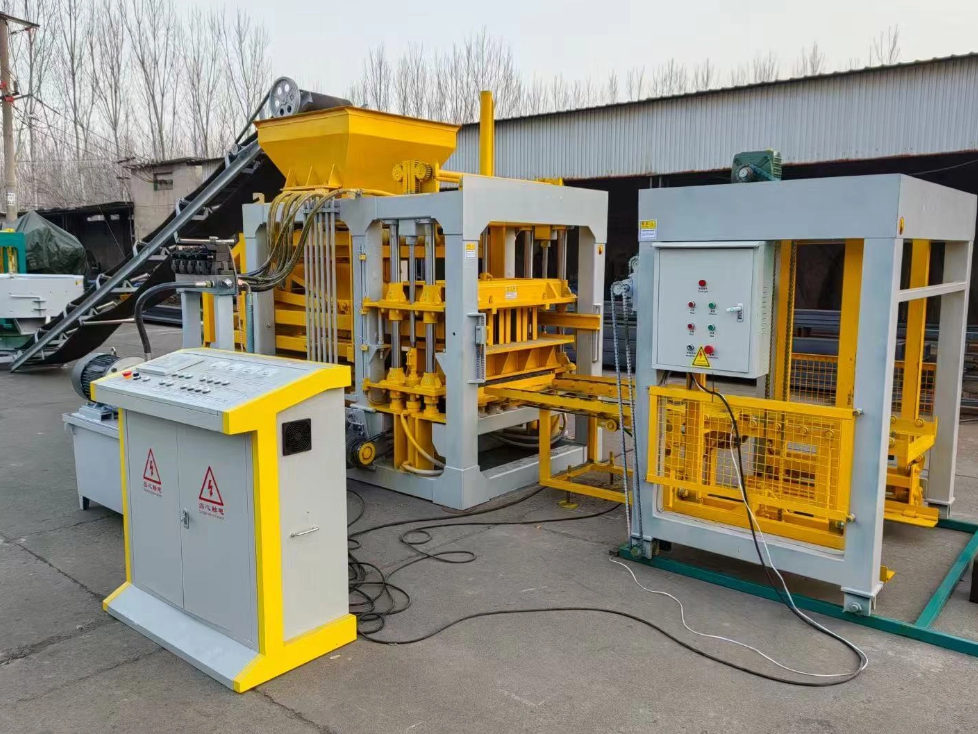
Uniform High Pressure Output Eliminates Internal Void Defects
Loose finished blocks with internal honeycomb voids are the most common quality failure for small scale production lines relying only single vibration forming. Drawing on long term on site commissioning work for hundreds of concrete block factories, uneven instantaneous vibration force cannot fully squeeze out air bubbles inside mixed aggregate slurry, leading to low density and poor compression resistance. National standard GB/T concrete block physical performance testing sets clear density threshold for qualified construction blocks, requiring minimum compactness rate above ninety two percent. Complete hydraulic forming systems adopt closed loop oil circuit transmission to deliver stable balanced pressure covering the whole mold cavity surface. The sustained pressing force pushes fine cement paste to fill gaps between coarse stones and fine sand, discharging trapped air out of raw material mixtures. Compared with pure vibration machines that only rely short frequency oscillation, hydraulic uniform compression cuts internal void reject rate by more than seventy percent and raises basic block density significantly.
Adjustable Multi Stage Hydraulic Pressure Matches Raw Material Formulas
Professional hydraulic block machines equip proportional hydraulic valve groups supporting multi stage pressure adjustment, a core advantage single mechanical presses cannot match. Construction material process specialists point out different raw material combinations including standard stone aggregate coal slag construction waste and permeable brick fine filler require targeted forming pressure values. Light waste residue mixtures need low pre compact pressure to avoid material overflow during feeding, while high strength curb stone production demands high tonnage final holding pressure to hit specified compressive strength indexes. Hydraulic PLC control panels store multiple pressure parameter presets for fast switching between different block types without mechanical structure modification. Factories producing diversified block categories save lots of formula testing time and stabilize finished strength standards by utilizing adjustable hydraulic pressure functions.
Real Factory Transformation Case Of Hydraulic Equipment Upgrade
A medium scale concrete block manufacturer carried out full production line renovation by replacing old vibration only machines with integrated hydraulic forming units two years ago. Before transformation, over eighteen percent of finished blocks displayed loose internal structure and broke easily during stacking transport, forcing frequent raw material ratio readjustment and waste material disposal. After installing complete dual vibration hydraulic pressing systems, third party lab test data shows average block density increased by thirteen percent and twenty eight day compressive strength rose by twenty two percent. Monthly finished product scrap volume dropped sharply, and the factory reduced raw aggregate and cement procurement loss cost by a large margin. The real renovation case fully proves hydraulic system transformation delivers measurable quality and economic gains for block production enterprises.
Synchronized Vibration Hydraulic Composite Forming Boost Consistency
Top tier automatic block machines combine front vibration pre compaction and post hydraulic constant pressure holding into one synchronized forming process. Raw material aggregates first get evenly distributed inside mold cavities via medium frequency vibration to eliminate local material accumulation, then hydraulic cylinders apply fixed tonnage pressure to lock compact state. National building material finished product dimensional tolerance standards demand block thickness error below zero point five millimeters. Synchronized linkage control of vibration and hydraulic pressure ensures every mold cavity receives identical compaction force. Batch blocks produced on composite hydraulic lines maintain uniform density and strength without front rear edge hardness differences appearing on simple vibration production equipment.
Stable Long Term Hydraulic Pressure Maintains Consistent Finished Quality
Ordinary mechanical toggle presses suffer obvious pressure attenuation after thousands of forming cycles due to metal elastic fatigue, while closed loop hydraulic systems retain stable holding pressure in continuous mass production. Hydraulic oil circuits transmit pressure evenly without mechanical clearance loss, and built pressure sensors feed real time data back to PLC for automatic compensation adjustment. Long term production monitoring data records hydraulic forming lines keep finished block strength deviation within small range even after ten thousand consecutive molding cycles. Equipment without hydraulic constant pressure function shows widening strength fluctuation day by day, bringing unstable delivery quality and client complaint risks for block suppliers supplying construction contractors.
Complete Hydraulic Block Machine R&D And Customized Production
Enterprises pursuing stable high density block output rely on manufacturers with independent hydraulic system design and complete production capacity, comprehensive strengths held by Yaoda. Yaoda owns more than twenty six years specialized block making equipment manufacturing experience, developing full QT series hydraulic automatic semi automatic block machine models. All hydraulic core components adopt imported Siemens control systems Yuken hydraulic valves and Albert oil pumps to guarantee steady long term pressure output. The brand provides full line customized layout according to factory space raw material formulas and daily output targets, with multilingual twenty four hour technical support and overseas on site installation service for building material producers across eighty plus global regions.
Table of Contents
- Uniform High Pressure Output Eliminates Internal Void Defects
- Adjustable Multi Stage Hydraulic Pressure Matches Raw Material Formulas
- Real Factory Transformation Case Of Hydraulic Equipment Upgrade
- Synchronized Vibration Hydraulic Composite Forming Boost Consistency
- Stable Long Term Hydraulic Pressure Maintains Consistent Finished Quality
- Complete Hydraulic Block Machine R&D And Customized Production