
 EN


The Core Difference Between Mobility and Fixed Production
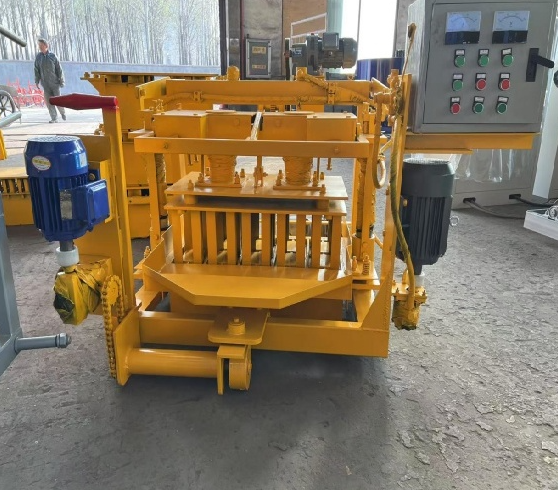
A mobile concrete brick making machine is built to move. It often sits on a trailer or a wheeled frame, so a crew can shift it from one job site to another. A stationary block machine is bolted to a concrete pad and stays in one place. That single difference shapes everything else. Mobility favors scattered projects, short runs, and remote locations. Fixed production favors volume, repeatability, and automation. The American Concrete Institute and ASTM C90 give useful benchmarks for block strength and dimensional tolerance. A machine that cannot hold those tolerances is not saving money. It is creating rejects. In a real case, a dealer in Cameroon needed equipment for two local clients in different towns. A mobile setup reduced transport headaches, while a stationary line would have required one central yard.
Production Scale and Investment Threshold
Scale decides the math. A small mobile unit may use 30 to 50 kW and fit in a few hundred square meters. That keeps the entry cost within reach for small and medium investors. A stationary line with full automation, multiple molds, and a curing system needs more space, more power, and a larger crew. It also delivers higher output per shift. The tradeoff is not about which machine is better. It is about which machine matches the order book. A contractor with many small projects may never feed a stationary line enough raw material to justify it. A producer serving a growing city may outgrow a mobile unit within a year. Matching capacity to demand is the first step in avoiding idle equipment.
Mobility, Site Conditions, and Logistics
Transport is a hidden cost in block production. Finished blocks are heavy and bulky. Moving them long distances eats profit. A mobile machine can produce near the point of use, which cuts hauling and breakage. That is a real advantage on rural roads and remote sites. The catch is input supply. Mobile production still needs cement, sand, aggregate, and water. If those materials are inconsistent, block quality will vary. A stationary plant can control batching, curing, and quality testing in one place. A client in Guinea ordered a complete brick line and 1500 pallets to support a fixed operation. The choice fit a centralized yard with steady demand. Site conditions, not fashion, should drive the decision.
Automation, Quality, and Mold Flexibility
Stationary machines usually win on automation. PLC control, touch screens, remote monitoring, and fault diagnosis are common on modern fixed lines. Those features reduce labor and improve consistency. Mold quality also matters. A precisely machined mold keeps gaps uniform and holds dimensional error within about plus or minus 0.5 mm. That precision supports standard bricks, hollow blocks, perforated bricks, curbstones, and slope protection blocks. Mobile machines can still change molds, but automation is often limited. A Sudanese client with two decades of China trade experience compared several factories before choosing two concrete brick production lines. The deciding factor was not price alone. It was stable output and documented quality control. For buyers, the lesson is to ask for mold tolerance and test reports, not just a catalog photo.
Total Cost of Ownership and Business Value
Purchase price is only the first number. Labor, energy, maintenance, molds, pallets, and transport all add up. A mobile unit may cost less upfront, but it often needs more manual handling and delivers lower output. A stationary line costs more, yet it can lower cost per block when volume is high. The right answer depends on the business model. A producer with steady municipal orders may recover the higher investment through lower unit cost. A producer chasing scattered rural projects may prefer mobility. Honest suppliers will explain where a machine fits and where it does not. They will also share spare parts planning and training needs. That transparency protects the buyer from a costly mismatch.
Choosing the Right Machine and Yaoda Manufacturing Support
Start with demand, site, budget, and labor. Then compare mobile and stationary options against those facts. Yaoda, with more than 26 years of experience, builds block making machines and AAC equipment. The lineup includes intelligent integrated block molding machines, fully automatic brick making machines, semi automatic brick making machines, heat treated molds, and glass fiber pallets. Yaoda serves buyers in Africa, Asia, and other regions, with cooperation cases in Cameroon, Guinea, and Sudan. For projects that need a reliable supply chain, mold precision, and production planning, Yaoda offers manufacturing depth and practical support. The best machine is the one that fits the job, not the one with the biggest brochure.