
 EN


The Tipping Point Where Manual Labor Stops Paying Off
Semi automatic block machines have earned their place on many job sites. They remove the back breaking work of manual tamping and let a small crew produce steady output. But there is a moment when the math changes. That moment usually arrives when order volume grows, labor gets harder to manage, or quality complaints start to bite. A machine that needs an operator at every step becomes a bottleneck. The question is not whether automation is better in general. The question is when the switch pays for itself. For producers serving growing cities or government contracts, the tipping point often comes sooner than expected.
What Automation Actually Changes on the Production Floor
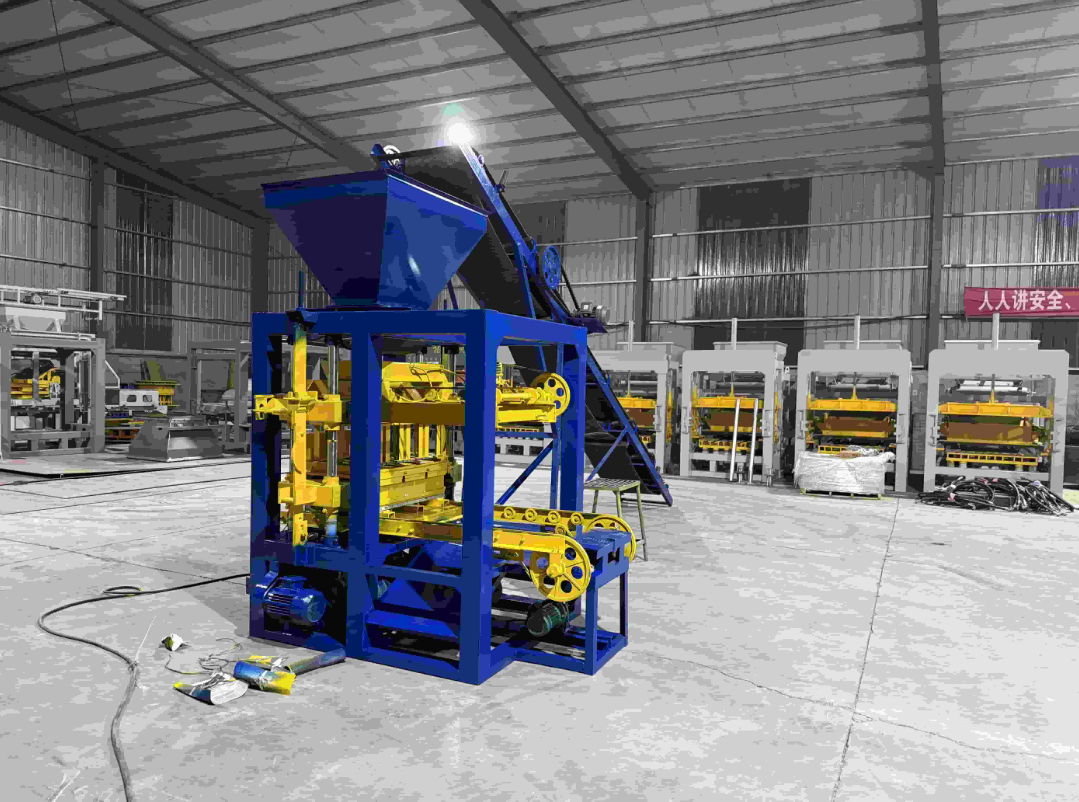
Automatic block machines bring three big changes. First, they replace manual decision making with PLC control. Settings for cycle time, vibration, and pressure stay consistent from the first block to the thousandth. Second, they add remote monitoring and fault diagnosis. A technician can spot a problem before it becomes a breakdown. Third, they allow fully automatic, semi automatic, and manual modes on the same machine. That flexibility matters during market shifts. A machine like the QT4-15S uses a Siemens touch screen and intelligent controls. It is a medium sized unit that draws 30 to 50 kW, which keeps energy costs lower than a large line. The footprint is around 3000 by 2000 by 2500 mm, and a 200 to 500 square meter yard can handle raw material and finished product storage. Those numbers matter for small and medium investors who want automation without a giant factory.
Comparing Semi Automatic and Automatic Output, Labor, and Quality
The table below uses typical ranges from industry practice. Actual results depend on mix design, curing, and operator skill.
| Factor | Semi Automatic Machine | Automatic Machine |
|---|---|---|
| Operator attention | High, constant | Low, monitoring only |
| Cycle consistency | Varies with operator | High, PLC controlled |
| Output per shift | Moderate | Higher |
| Labor cost per block | Higher | Lower |
| Quality variation | More frequent | Less frequent |
| Mold change time | Manual, slower | Often faster |
| Initial investment | Lower | Higher |
| Best fit | Small batches, mixed products | Steady volume, repeat orders |
The pattern is clear. Semi automatic wins when volume is low and product mix changes often. Automatic wins when volume is steady and quality must be repeatable. A producer who makes standard bricks, hollow blocks, and curbstones on the same day may still prefer semi automatic. A producer who ships thousands of the same block every week will feel the pain of manual inconsistency.
A Real Upgrade Story from an African Client
A brick factory owner in Guinea, West Africa, ran a semi automatic line for several years. Demand grew after a nearby housing project broke ground. The owner wanted to update the equipment but was not sure about the cost. After online discussions and a detailed equipment plan, the owner ordered a complete brick machine line and 1500 glass fiber pallets. The new line included automatic controls and better mold precision. The pallets alone made a difference. Glass fiber pallets have an elastic modulus up to 3.7 GPa, a bending strength of 51.0 MPa, and a surface hardness of Shore 72. They resist impact three times better than ordinary plastic pallets and hold 95 percent of bending strength after repeated use. The owner reported fewer broken blocks and less downtime. The upgrade made sense because the order book was full and labor was hard to keep. That is the pattern. Automation pays when demand is steady and manual labor is the constraint.
The Financial Threshold and Risk of Upgrading Too Soon
Automation is not free. A fully automatic line costs more upfront than a semi automatic machine. The payback comes from lower labor per block, less rework, and higher output. But if the order book is thin, the machine sits idle and the investment hurts. A medium sized automatic machine may cost between 100,000 and 500,000 yuan, which is far less than a large production line. That range fits many small and medium investors. The key is to match capacity to real demand. A producer with steady municipal orders or a growing housing market can justify the step up. A producer chasing scattered rural jobs may not. Honest suppliers will say so. They will also explain mold tolerance, which for a good machine stays within plus or minus 0.5 mm. That precision supports standard bricks, hollow blocks, perforated bricks, curb stones, and slope protection bricks. Poor mold tolerance creates rejects, and rejects erase the savings from automation.
Making the Transition with Yaoda Manufacturing Support
Moving from semi automatic to automatic is a business decision, not just a machine purchase. It needs training, spare parts planning, and a supplier who understands local conditions. Yaoda, with more than 26 years of experience, builds block making machines and AAC equipment. The product range includes the QT4-15S intelligent integrated block molding machine, the QT6-15 fully automatic brick making machine, semi automatic models, heat treated molds, and glass fiber pallets. Yaoda has worked with clients in Cameroon, Guinea, and Sudan, among other markets. That experience helps buyers avoid common mistakes, such as oversizing the line or choosing the wrong mold for local aggregates. For producers at the tipping point, Yaoda offers manufacturing depth and practical support to make the upgrade a calculated step rather than a gamble.
Table of Contents
- The Tipping Point Where Manual Labor Stops Paying Off
- What Automation Actually Changes on the Production Floor
- Comparing Semi Automatic and Automatic Output, Labor, and Quality
- A Real Upgrade Story from an African Client
- The Financial Threshold and Risk of Upgrading Too Soon
- Making the Transition with Yaoda Manufacturing Support