
 EN



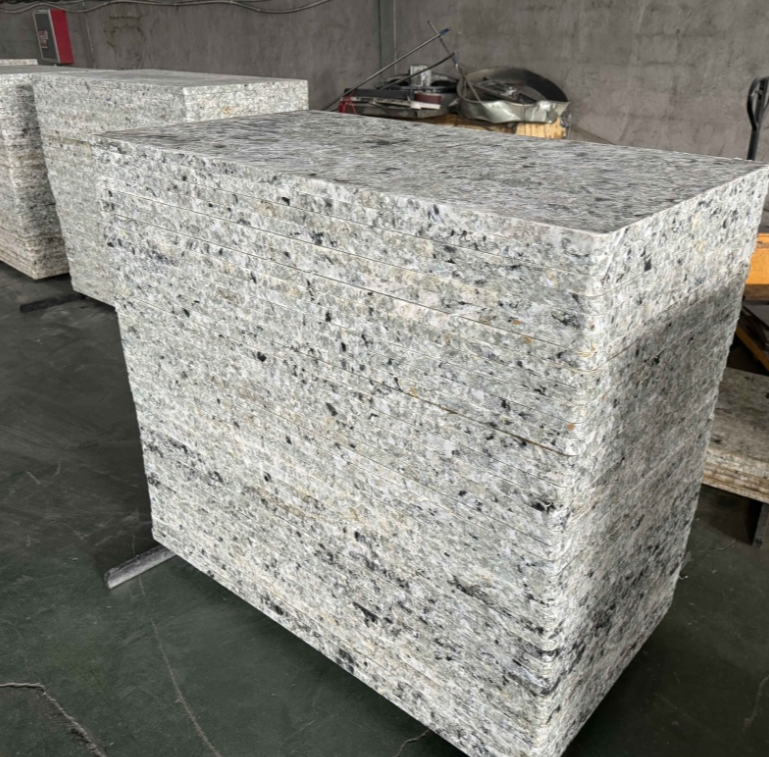
Where the Real Cost Difference Shows Up
A brick pallet comparison between glass fiber and wood usually starts with the quote sheet, yet the number that matters sits further down the line. Wooden pallets are cheap to buy and easy to cut on site. Fiberglass pallets cost more upfront. Cheap wood can look attractive until the first wet season. The gap narrows when rejected blocks, transfer jams, and replacement labor enter the calculation. In a plant running two or three shifts, a pallet that stays flat and stiff protects block edges and keeps automated handling predictable. A pallet that swells or chips creates small disruptions that add up. The useful question is not which pallet costs less on day one, but which one carries fresh concrete through the curing cycle with fewer surprises.
How Wood and Fiberglass Behave Around Wet Concrete
Wood absorbs water through cut edges, fastener holes, and surface scratches. Repeated wetting and drying causes thickness swell, and swell stresses the glue lines. Fiberglass reinforced polymer uses continuous glass fibers in a resin matrix. The fibers carry tensile load, and the resin shields them from moisture. That does not make every fiberglass panel equal. Resin type, fiber volume, cure control, and edge sealing decide performance. A low-cost panel with exposed fibers at the edge can wick water and chip. A well-made panel resists moisture and keeps stiffness under wet cycling. ASTM D790 flexural testing offers a repeatable way to compare candidate panels, but the test bar does not reproduce a dirty return track or a misaligned pusher. In practice, a supplier should provide panel thickness, fiber content, and edge sealing details, because those three items often separate a durable panel from a short-lived one.
| Property | Wooden pallet | Glass fiber pallet |
|---|---|---|
| Water absorption | High, especially at cut edges | Low when sealed |
| Thickness swell after wet cycling | Often double digits in percent | Minimal |
| Fastener retention after repeated wetting | Drops as wood softens | Stable in molded or sealed inserts |
| Common failure mode | Delamination, crushed corners | Edge chips, resin cracks |
| Upfront cost | Lower | Higher |
| Best fit | Dry, light-duty, short cycles | Wet, repeated handling, flatness critical |
Load, Support Spacing, and the Fatigue Problem
A pallet rarely fails from one heavy block. Fatigue comes from repeated small deflections as rollers and transfer arms push it along. Support spacing sets how much the panel bends on each pass. Wide spacing increases deflection, and the top surface works against block edges. Misaligned transfer tables create point loads at corners. Wood can tolerate some flex but loses stiffness when wet. Fiberglass holds stiffness better, yet it is not immune to point loads. Sharp impacts from dropped blocks or forklift tines can chip edges. The pallet design has to match the load path, not just the block weight. A stiff panel on poor supports can fail faster than a moderate panel on a clean, level track.
A Field Case from a Humid Coastal Plant
At a coastal block plant in Southeast Asia, wooden pallets began showing edge delamination during the monsoon season. Inspection found water entering at fastener holes and support rollers misaligned by roughly 60 mm. The plant replaced part of the fleet with sealed fiberglass panels and realigned the rollers. Edge chipping dropped, and transfer jams became less frequent. The result was not a miracle. The fiberglass panels still showed wear at impact points, and the plant added chamfers to guide blocks more smoothly. The case points to a broader lesson. Pallet material matters, but handling layout and water control often decide whether that material reaches its potential.
Maintenance and Handling That Change the Math
Simple habits shift the cost curve. 1. Inspect edges weekly and remove pallets with deep cracks before fragments reach the mix. 2. Keep return tracks clean, since cured cement grit wears surfaces like sandpaper. 3. Store spare pallets flat and shaded, not leaning in the sun. 4. Train forklift operators to avoid dragging pallets across concrete. 5. Track batches by supplier and date so a bad run is isolated quickly. Wooden pallets can be repaired with patches, but repairs rarely restore stiffness. Fiberglass pallets tolerate washing better, yet chipped edges should be sealed before water reaches the fibers. Small maintenance steps cost little and prevent small damage from becoming a line stoppage.
Matching Pallet Choice to the Plant Layout
Neither material wins everywhere. Wood makes sense in dry climates, light-duty cycles, and operations where pallets are cut or modified often. Fiberglass makes sense in wet, abrasive, and repeated handling where flatness and dimensional stability matter. A buyer should share block weight, support spacing, transfer speed, cleaning method, and curing conditions before choosing. A supplier that understands the whole handling system can spot mismatches early. YAODA, based in southeastern Shandong, supports pallet and block machine projects with manufacturing scale, technical staff, and export experience, which helps align pallet design with the actual plant layout. A trial batch on the dirtiest part of the return loop tells more than a catalog page.