 EN
EN
Core Functionality of the Automatic Concrete Block Making Machine
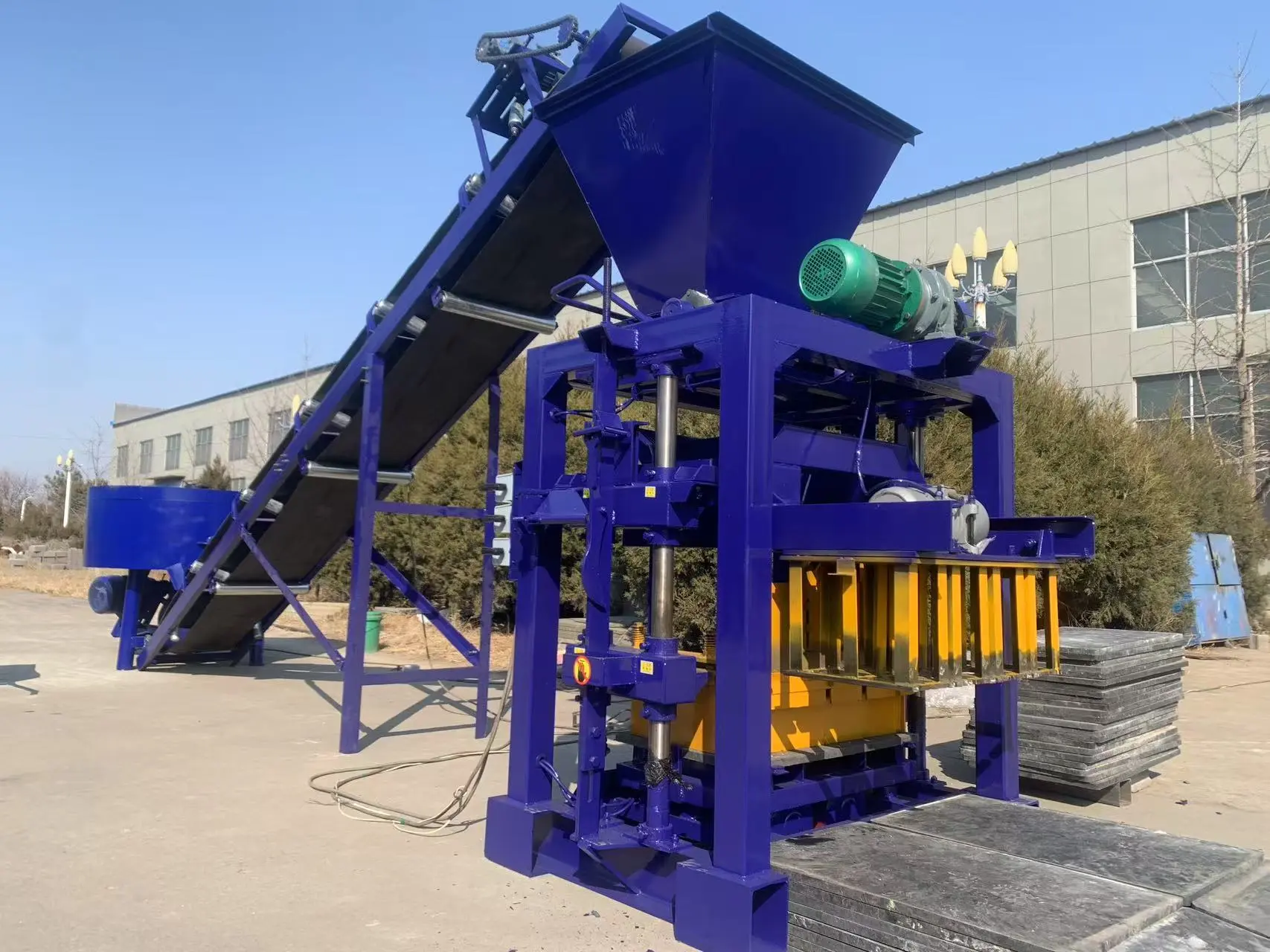
Key components: Hopper, mixer, hydraulic press, PLC controller, and curing conveyor
An automatic concrete block making machine combines several key parts to turn basic ingredients into solid blocks ready for construction. First off, there's the hopper that holds all the necessary stuff like cement, sand, gravel, and water. These materials get mixed together until they form what looks like damp sand but isn't quite wet enough yet. Once properly blended, this semi-dry mix moves into special molds. Here comes the heavy lifting part where hydraulic pressure between 1,500 to 3,000 pounds per square inch really packs everything down tight. At the same time, vibrations at around 40 to 60 times per second shake out any trapped air bubbles, resulting in blocks denser than 1,800 kilograms per cubic meter. The whole operation runs smoothly thanks to a computer system called a PLC that constantly tweaks how long each part works and when things should happen next. After shaping, blocks ride along a conveyor belt to their final resting place where they cure either through steam treatment or just sitting in normal conditions. This ensures they reach proper strength as required by industry standards such as ASTM C1319 and IS 2116.
How an automatic concrete block machine works: Seamless integration of batching, molding, and demolding
Operational efficiency stems from synchronized automation across three phases:
- Batching: Load cells and volumetric sensors measure raw materials with ±2% precision, optimizing cement-to-aggregate ratios and minimizing water variability.
- Molding: Dual-force compaction—hydraulic pressure combined with high-frequency vibration—ensures structural density and dimensional stability.
- Demolding: Pneumatically actuated ejection pins release cured blocks within 15–20 seconds, reducing cycle time without compromising integrity.
The PLC continuously monitors mold temperature, vibration frequency, and pressure transducer feedback, enabling millisecond-level adjustments. This closed-loop control delivers dimensional accuracy within ±1 mm and reduces material waste by 7–12% compared to manual or semi-automatic methods.
Step-by-Step Operational Workflow of an Automatic Concrete Block Making Machine
Automated material feeding, precise dry-mix batching, and high-frequency vibration compaction
The raw ingredients drop automatically from those calibrated hoppers right into the mixing unit. What's really nice about this setup is that it keeps batch consistency pretty tight, around plus or minus 2% variance. No more guessing games with manual measurements, so we get consistent results every time through the mixing cycle. Once mixed, the semi-dry concrete moves into the molding area. Here, things get interesting with vibrations ranging between 40 to 60 Hz combined with carefully controlled hydraulic pressure. The whole point is to press everything together evenly throughout the mold. When all goes well, the finished product reaches densities over 2,000 kg per cubic meter. We also see about a 30% reduction in air pockets inside the material. These improvements translate directly to stronger compression resistance and better overall durability according to standard ASTM C140 tests.
Real-time PLC control and sensor-driven quality assurance (density, dimension, ejection force)
A central PLC coordinates all operations using integrated sensors that monitor three key quality parameters:
- Density, measured via pressure transducers to verify ≥95% compaction efficiency;
- Dimensions, verified by laser scanners maintaining ±1 mm tolerance across length, width, and height;
- Ejection force, tracked via load cells to optimize release pressure and prevent surface cracking or deformation.
These inputs trigger automatic adjustments to hydraulic pressure, vibration amplitude, and dwell time—slashing defect rates to under 0.5% and supporting uninterrupted 24/7 production.
Tangible Performance Benefits of the Automatic Concrete Block Making Machine
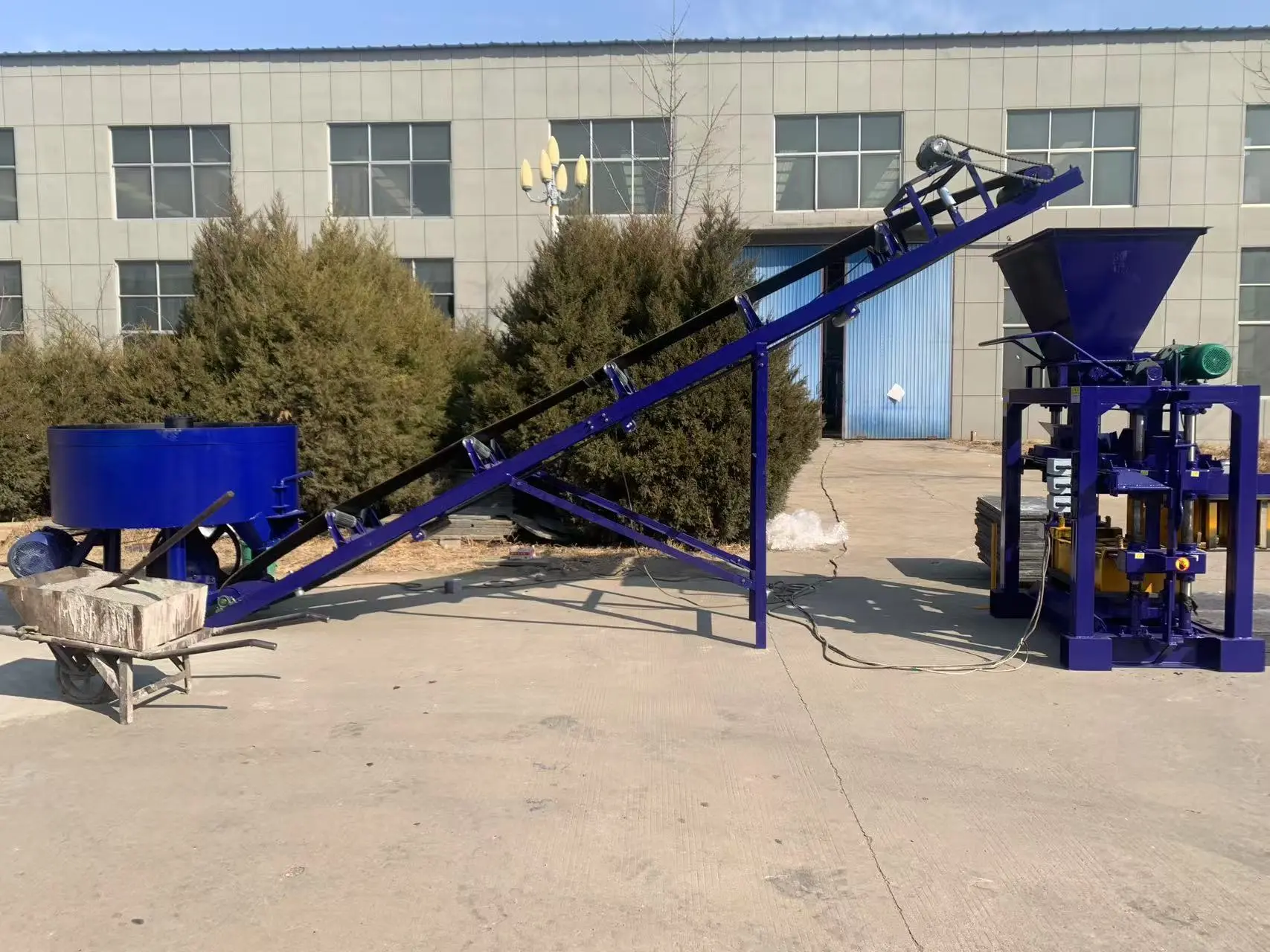
Output capacity: 2,000–15,000 blocks per 8-hour shift, with uptime 92%
Automatic block making machines can produce anywhere between 2,000 to 15,000 standard concrete blocks during an 8 hour workday. These systems work just as well on smaller construction sites as they do for big housing complexes across town. The secret lies in high frequency vibrations that pack the concrete mixture quickly, allowing these machines to churn out over 1,500 blocks every single hour. Compared to old fashioned manual casting techniques, modern automated systems boost production by around twenty times while keeping machines running smoothly most of the time. Manufacturers who follow proper maintenance protocols report their equipment stays online more than 92 percent of the time according to industry reports.
Labor efficiency: 60–80% reduction in operators and near-zero batch-to-batch variability
When automation takes over, it brings together all those steps like mixing, molding, compacting, and checking quality into one smooth operation. This typically means factories need about half to four fifths fewer workers doing hands-on tasks. What happens next? Well, most operators move into supervisory positions where they watch over PLC dashboards, run regular calibration checks, and handle maintenance work when needed. The real game changer comes from sensors that provide instant feedback combined with automatic part removal. These systems basically remove all the guesswork between people, so dimensions stay within just a fraction of a percent difference from batch to batch. The results speak for themselves really. Less waste overall somewhere around 15 to maybe even 30 percent reduction. Compliance becomes much easier too since products meet both IS 2116 and ASTM C1319 standards consistently. Every single unit coming off the line performs structurally the same way without surprises.
Strategic Considerations for Adopting an Automatic Concrete Block Making Machine
When thinking about getting an automatic concrete block maker, there are several things worth considering before pulling the trigger. Production capacity is probably the first thing to look at. Fully automatic machines generally crank out somewhere between 2,000 to maybe even 15,000 blocks during an 8 hour workday, but they come with a bigger price tag compared to their semi-automatic cousins. Labor needs change quite a bit too. Automation cuts down on manual workers by around 60 to 80 percent, which sounds great until you realize it creates new demands for people who know how to handle PLC systems, calibrate sensors, and maintain those complex hydraulic components. Raw materials matter as well. Using non-standard aggregates or materials with too much moisture can really mess with the vibration process and lead to weaker blocks overall. Don't forget about long term expenses either. Energy bills jump up about 25% when using high frequency vibrators instead of regular presses. Maintenance isn't free either - think about things like checking hydraulic fluids every three months and updating PLC software once a year. And last but not least, find a supplier that actually cares about customer support. Look for companies that provide thorough training sessions, offer remote troubleshooting options, and have technicians who can show up within two days if something goes wrong. Good service makes all the difference when trying to keep operations running smoothly above 92% of the time.
FAQ
What are the main components of an automatic concrete block making machine?
An automatic block making machine includes a hopper, mixer, hydraulic press, PLC controller, and curing conveyor, each playing a vital role in the production process.
How does an automatic concrete block making machine work?
These machines integrate batching, molding, and demolding into a streamlined operation, using load cells, hydraulic pressure, and high-frequency vibration to ensure precision and efficiency.
What labor savings can be expected with automation?
Automation can reduce human labor between 60–80%, with manual tasks replaced by supervisory roles and sensor-driven processes.
What is the output capacity of an automatic concrete block making machine?
Such machines can produce between 2,000 and 15,000 blocks during an 8-hour shift, with a machine uptime of more than 92%.
Table of Contents
- Core Functionality of the Automatic Concrete Block Making Machine
- Step-by-Step Operational Workflow of an Automatic Concrete Block Making Machine
- Tangible Performance Benefits of the Automatic Concrete Block Making Machine
- Strategic Considerations for Adopting an Automatic Concrete Block Making Machine