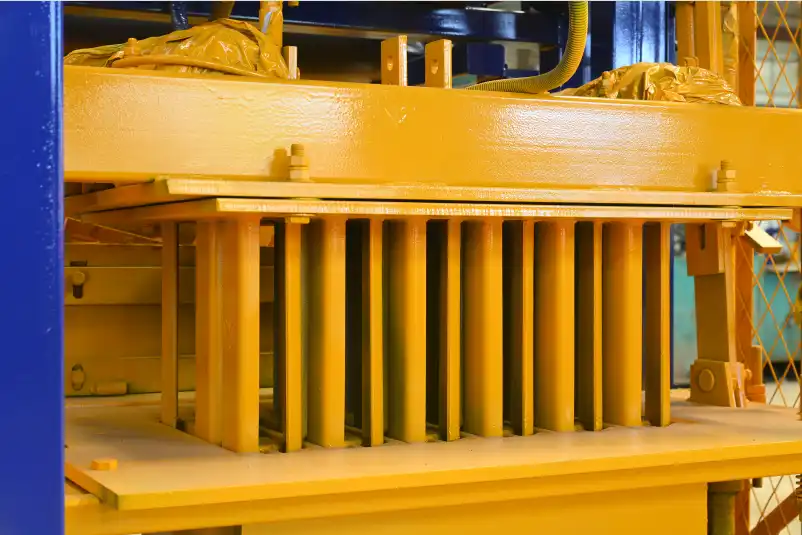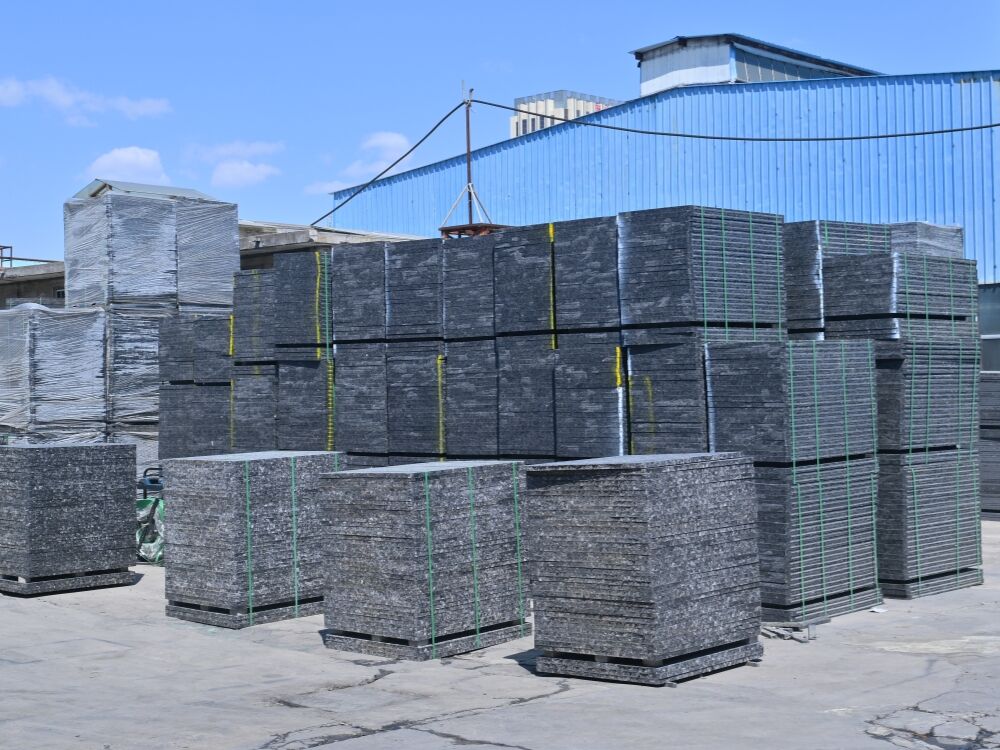

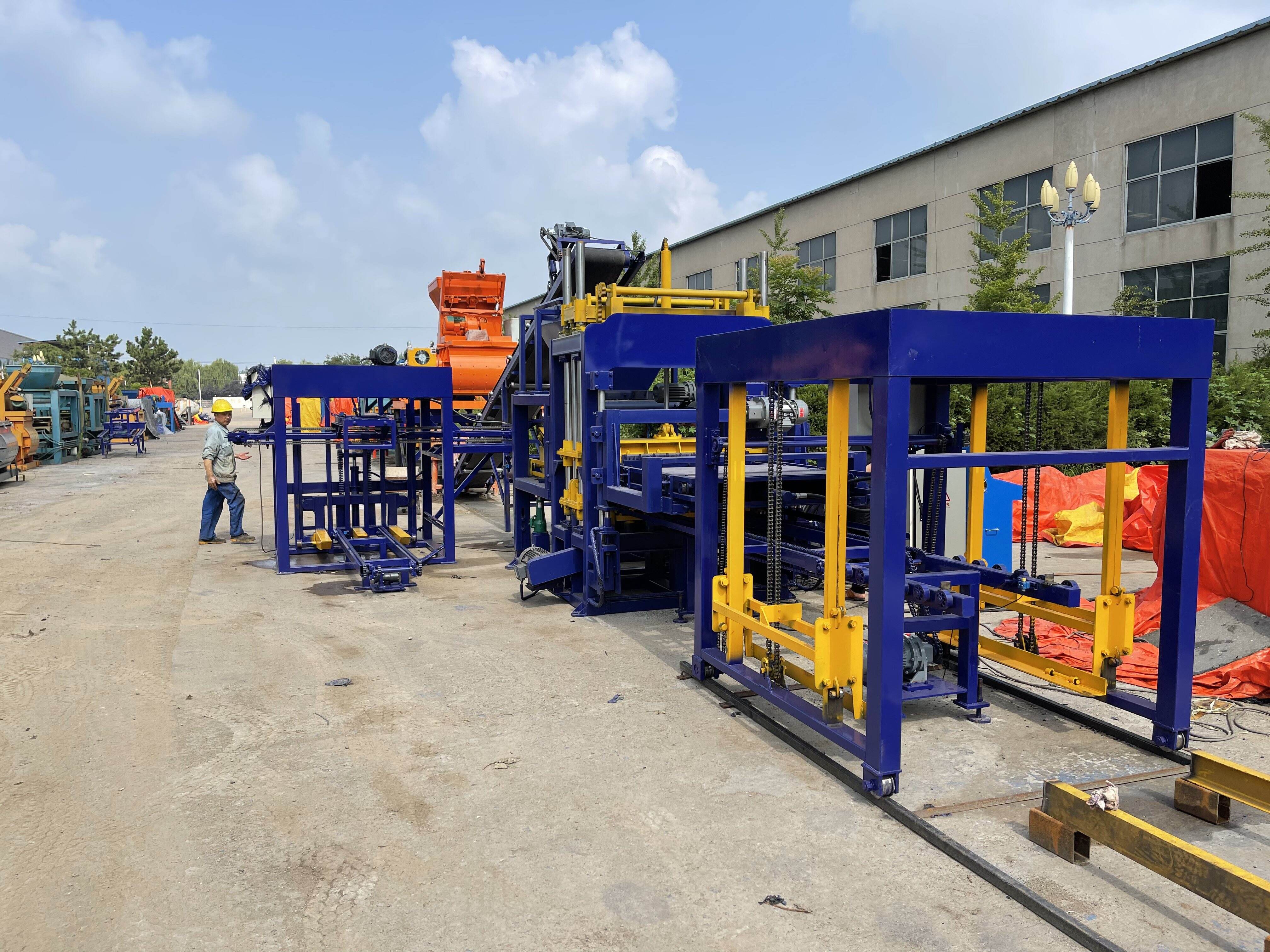
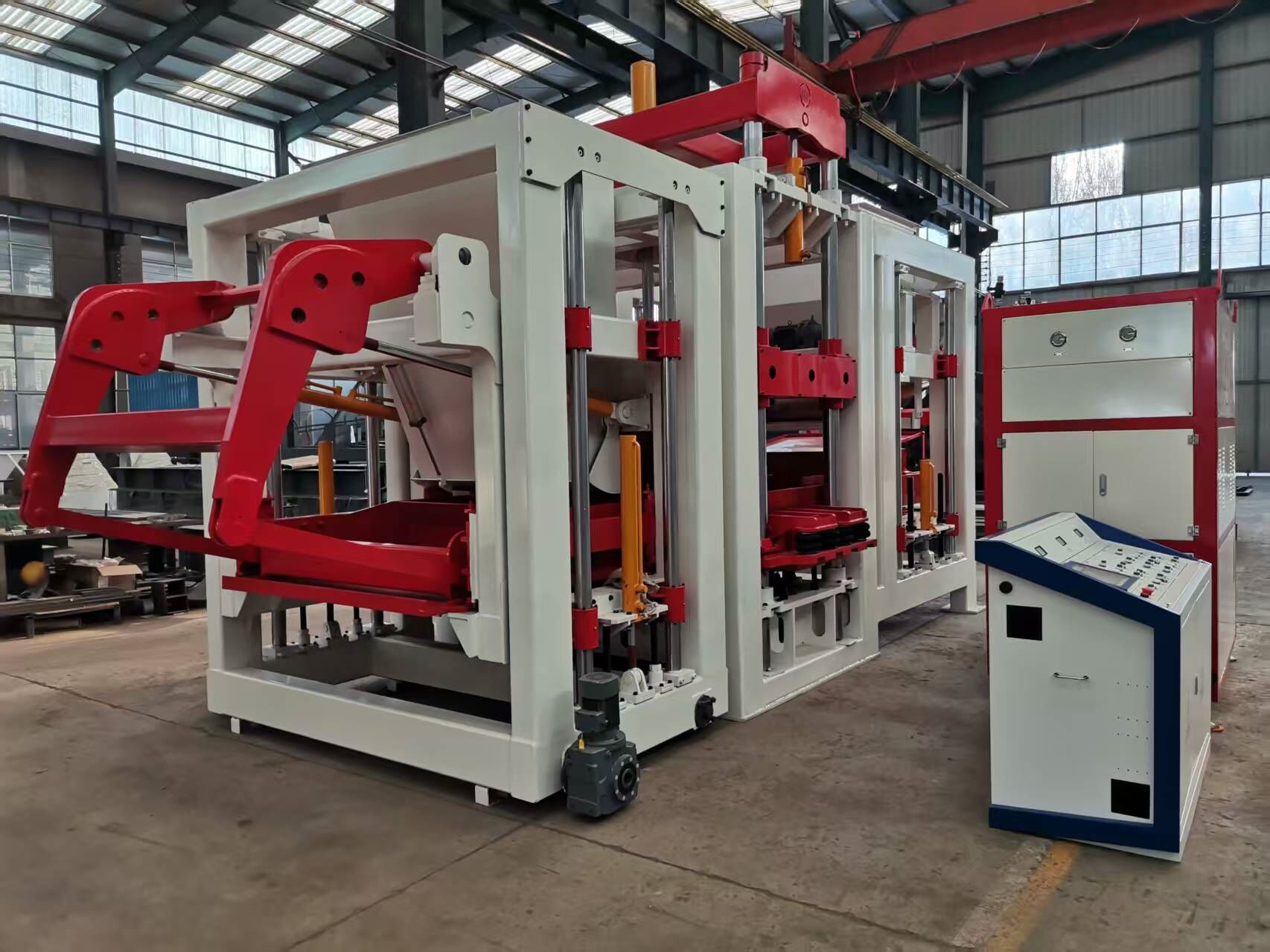
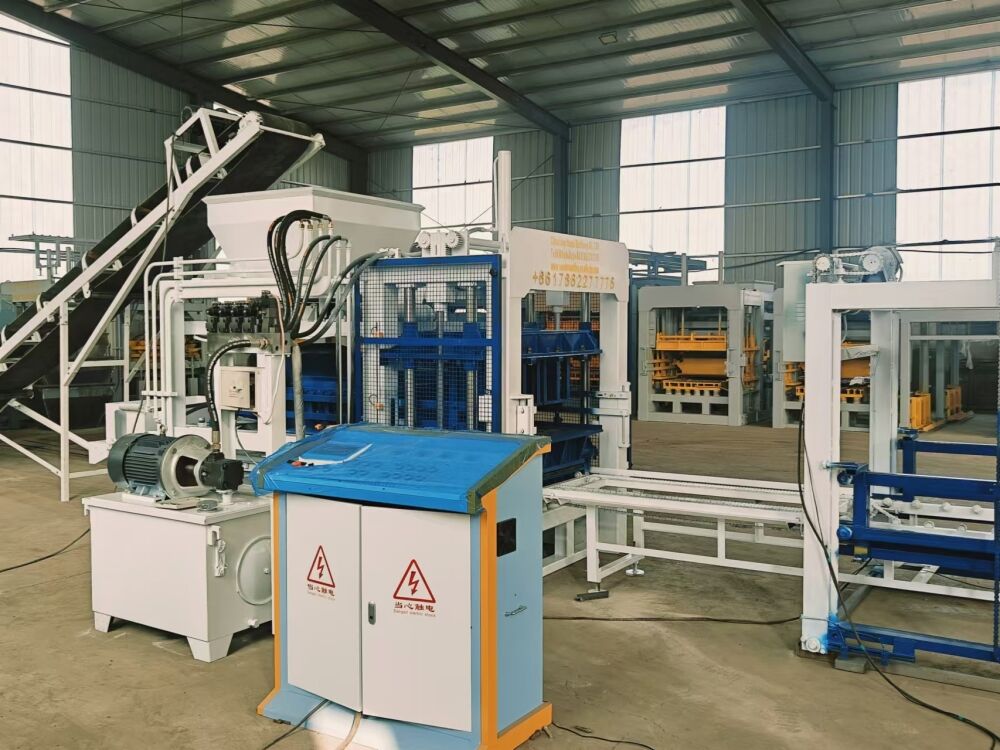
1. Capacity adaptation for small and medium-sized needs: Single mode can produce 4 standard bricks (400 * 200 * 200mm), with a stable molding cycle controlled at 25 seconds per mold. The theoretical hourly output is about 576 bricks, and the daily (8-hour working system) production capacity exceeds 4500 bricks. It can meet the centralized brick demand for rural construction and small-scale projects, without causing waste of raw materials and site due to overcapacity.
2. Stable quality of finished products: Equipped with an automatic pressure control system, the pressing force is precise, the compactness of the brick body is high, and the uniformity of the fabric is improved, avoiding the problem of uneven brick density caused by semi-automatic manual fabric. The qualified rate of finished products exceeds 98%.
3. Core configuration: Equipped with an automatic feeding machine and a spiral conveying system, the raw material particle size is adapted to ≤ 5mm sand and gravel, fly ash, and recycled aggregates from construction waste; The control system adopts a simple touch screen, which can store 5 sets of production parameters and support automatic fault alarms (such as raw material shortage and abnormal pressure). Novices can operate it after 30 minutes of training; The body can be equipped with a dust cover, suitable for brick factory environments with high dust levels.
4. Controllable investment: Compared to fully automatic hydraulic brick making machines, the procurement cost is reduced by more than 70%, making it suitable for small users with limited budgets but pursuing automation; Low energy consumption, combined with automation to reduce labor costs, reduces annual operating costs by 30% compared to semi-automatic models.
5. Convenient maintenance: Core components (such as forming oil cylinders and conveyor motors) are selected from mature domestic brands, and accessories are easy to purchase and have low prices; The equipment structure is simplified, and troubleshooting is intuitive. Daily maintenance only requires regular cleaning of the fabric system and inspection of hydraulic oil, without the need for a professional maintenance team, reducing the maintenance threshold for small and medium-sized users.