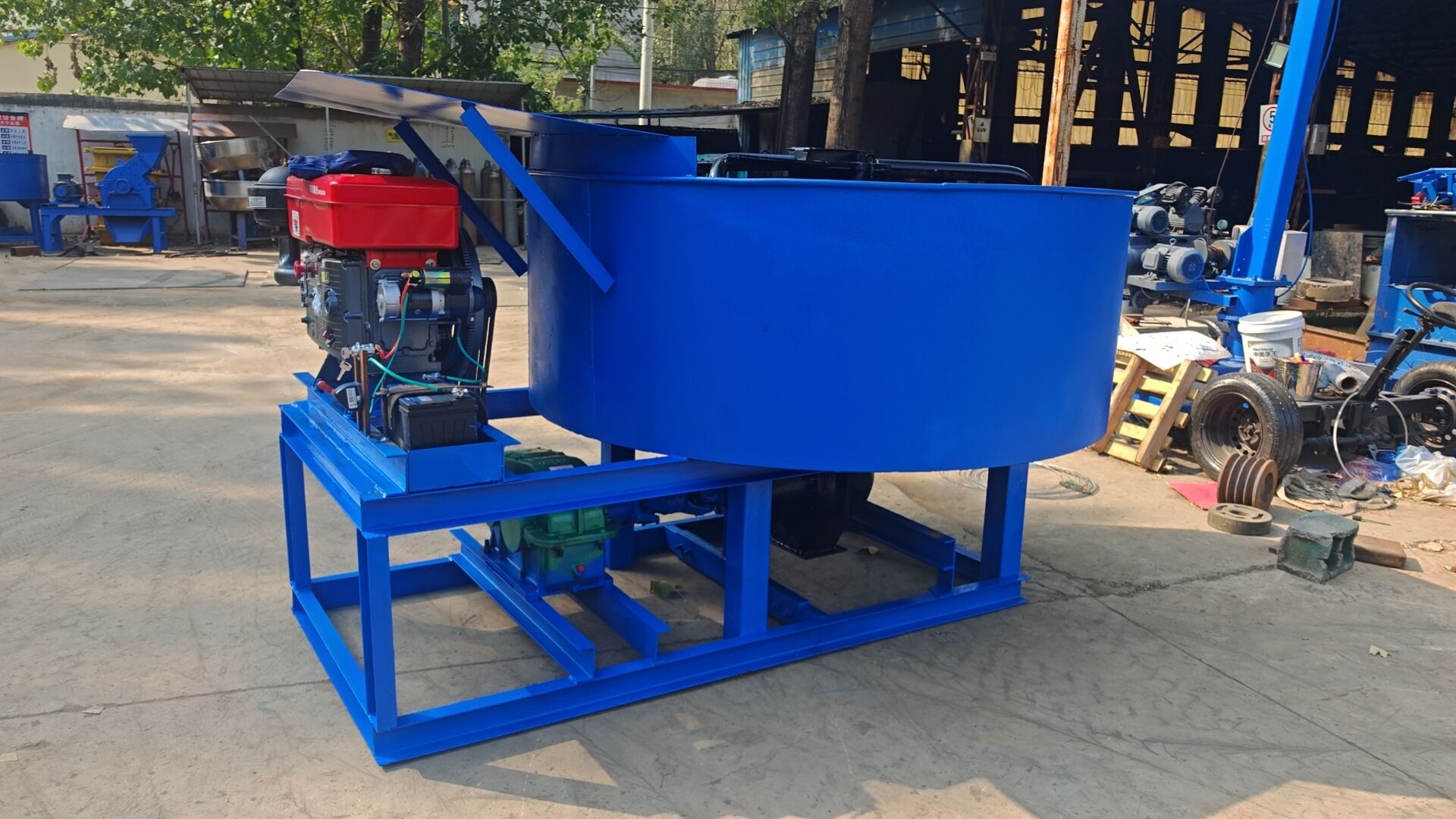
1. No external power dependence, suitable for remote/temporary working conditions: powered by diesel engines, no need to connect to 380V industrial electricity, completely eliminating power supply limitations. It is particularly suitable for remote mountainous areas for road construction, field infrastructure (such as photovoltaic power station foundations, water conservancy ditches), rural self built houses, temporary emergency projects, and other scenarios without power grid coverage. It can also cope with sudden situations such as power outages and unstable power supply on construction sites, ensuring uninterrupted mixing operations.
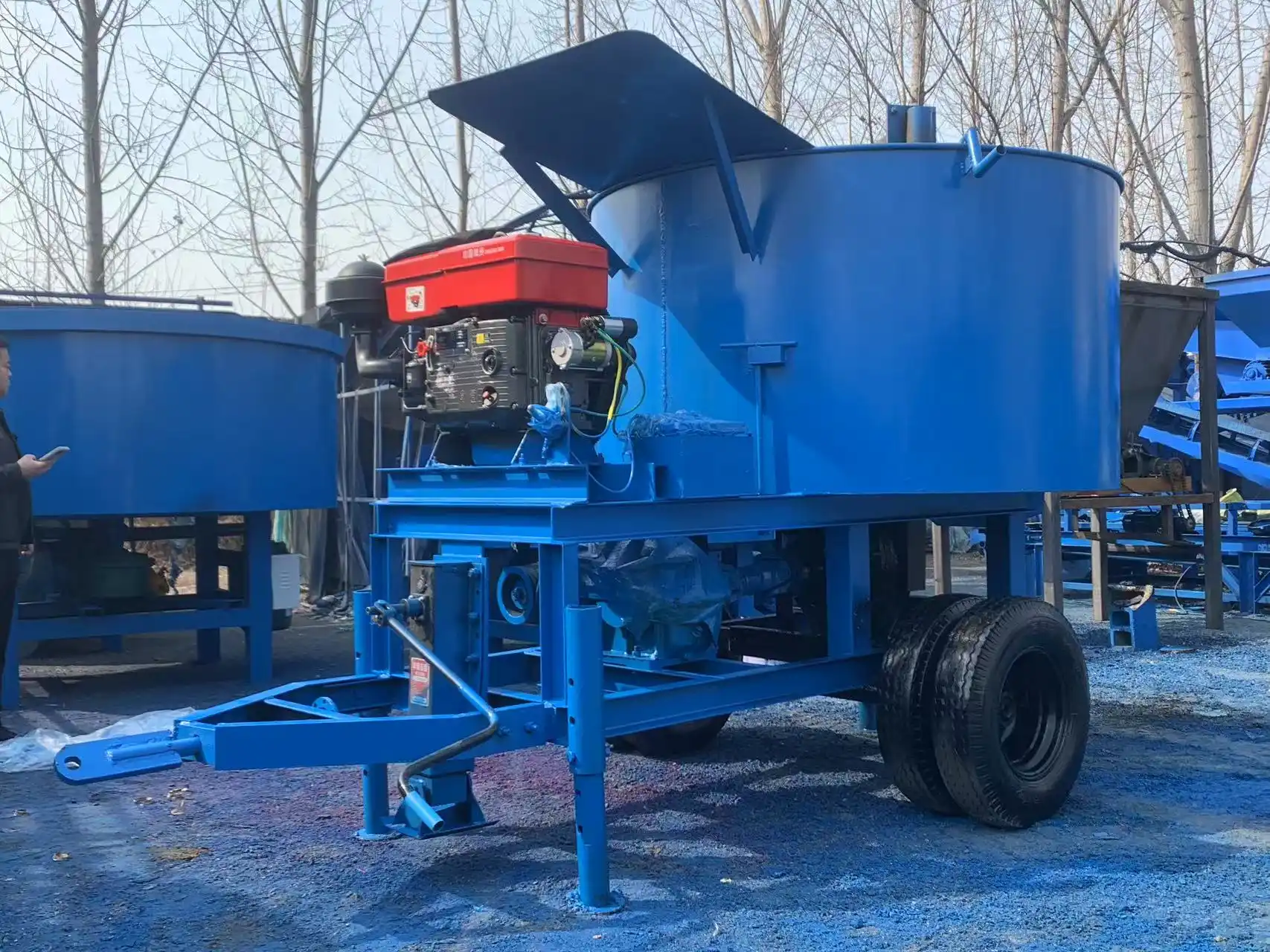
2. High maneuverability, convenient and efficient transfer: The whole machine is integrated on a frame with tires, equipped with a traction hook, and can be directly towed and transferred by agricultural tricycles, pickups or small trailers without dismantling and lifting; The body comes with supporting legs, which can be quickly leveled upon arrival at the work site to start construction. For multi site rotation construction (such as scattered houses in villages and towns, small municipal repair projects), it greatly saves equipment handling time and costs.
3. Strong power: The diesel engine has high torque and stable power output, which can drive the mixing system to easily handle the mixing of dry and hard concrete, large aggregate concrete (aggregate particle size up to 100mm), and special mortar. Even when fully loaded, it is not easy to stall; Compared to electric mixers of the same power, it has stronger overload capacity and can still operate stably even when the mixing material ratio fluctuates (such as high moisture content in sand and gravel).