
 EN


Why the Invoice Price Only Tells Part of the Story
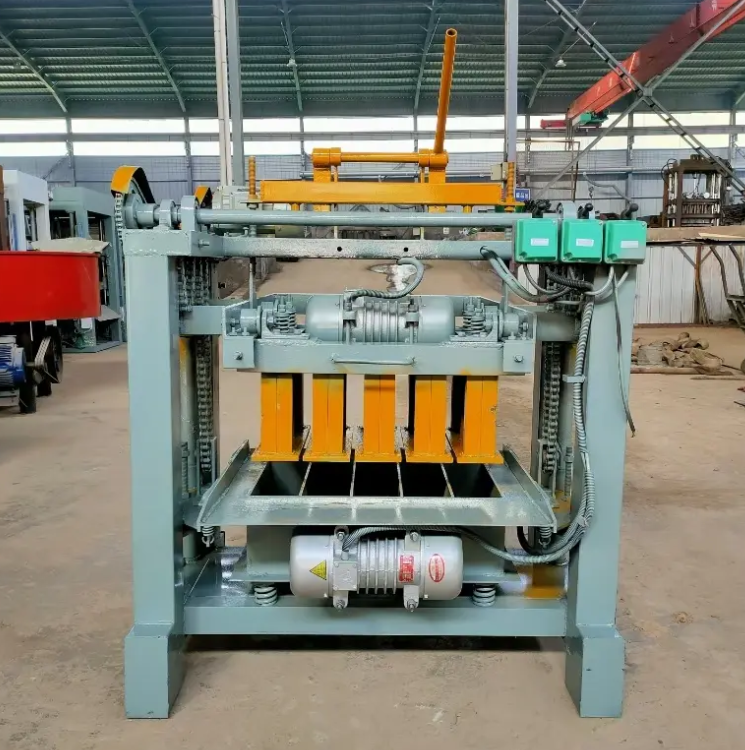
A semi automatic brick making machine often wins on the first number a buyer sees. The quote is lower, the installation is simpler, and the electrical panel does not need the same level of protection. That first number can be misleading. A machine is a cost stream, not a one-time purchase. Labor, power, molds, pallets, spare parts, and downtime all flow from the choice. A fully automatic concrete block machine may cost more upfront, but it can reduce the number of people needed per shift and produce more blocks per hour. Whether that trade pays off depends on local wages, electricity quality, product mix, and how many shifts the plant actually runs.
The cost comparison only becomes useful when both machines are measured over the same period, at the same output, under the same site conditions.
Breaking Down the Cost Categories That Actually Matter
Equipment price is just the entry ticket. Several other categories deserve a line in the budget.
Installation and foundation work. Automatic lines need more concrete, more leveling, and more conveyor support.
Power supply and conditioning. Voltage stabilizers, transformers, and clean air systems add cost on automatic setups.
Labor. Semi automatic machines need more operators. Automatic lines need fewer, but they need better trained technicians.
Maintenance and spare parts. PLC modules, sensors, and hydraulic components can be expensive and slow to arrive.
Molds and pallets. Both machine types need molds. Pallet quantity depends on curing space and cycle time.
Curing and handling. Automatic lines often need stackers and curing racks to keep pace.
A budget that covers only the machine will miss the real cost. Buyers who plan for the full system tend to have fewer surprises.
Labor and Power Variables That Swing the Numbers
Labor is the biggest variable in most cost models. In a region with low wages, a semi automatic line can run three shifts with a crew that costs less than one skilled automation technician. In a region with high wages, the labor savings from automation can justify the higher purchase price within a few years.
Power quality matters just as much. Automatic lines rely on sensors and PLCs that are sensitive to voltage swings. A stabilizer helps, but it adds capital cost and maintenance. Semi automatic machines are more tolerant. They can run on a generator during outages without losing the whole production day.
ASTM C90 sets a minimum net compressive strength of 2,000 psi for loadbearing concrete masonry units. That standard is a useful reminder that cost cutting cannot come at the expense of mix quality or curing. A cheap block that fails the standard is not a bargain.
A Cost Table With Field Based Ranges
The table below uses typical ranges from equipment suppliers and field reports. Actual numbers vary with country, mold size, shift pattern, and local service costs.
| Cost Category | Semi Automatic | Fully Automatic | Notes |
|---|---|---|---|
| Equipment price | Lower | Higher | Varies by model and output |
| Operators per shift | 4 to 8 | 1 to 3 | Training level differs |
| Power conditioning | Minimal | Often required | Stabilizers and clean air |
| Maintenance skill | Basic mechanical | PLC and sensor | Local support matters |
| Spare parts cost | Lower | Higher | Import lead time adds risk |
| Molds and pallets | Similar | Similar | Pallet count depends on curing |
| Space requirement | Smaller | Larger | Conveyors and stackers |
| Ramp up time | Faster | Slower | Automatic lines need tuning |
The right column matters as much as the numbers. A lower equipment price can be erased by higher labor costs or frequent downtime. A higher equipment price can be justified by steady output and lower labor per block.
What a Small Producer Learned After Two Years
A producer in South Asia started with a semi automatic brick making machine and later added a fully automatic line. The semi automatic unit ran for two years, making hollow blocks and pavers for local buyers. The owners wanted higher volume for a new contract, so they invested in automation.
The automatic line performed well in dry weather. During the monsoon, voltage fluctuations caused frequent stops. A stabilizer helped, but the line still needed more attention than expected. Spare parts had to be imported, and waiting time added to the cost. The semi automatic machine kept running through the same storms, producing smaller batches for customers who needed quick deliveries.
The lesson was not that automation failed. The lesson was that the two systems served different roles. The automatic line handled bulk orders. The semi automatic unit handled flexibility and backup. The owners now treat both as part of the same cost strategy.
Matching the Spend to Site Conditions and Support
The lowest cost per block is not always the lowest purchase price. It is the combination of equipment, labor, power, maintenance, and market demand that fits the site. A plant with stable power and skilled technicians can often justify a fully automatic line. A yard with unstable power and affordable labor may get more value from a semi automatic setup. Neither choice is permanent. Many producers start with semi automatic and add automation as the market grows.
YAODA has been manufacturing block making equipment since 1999 from a 16,000 square meter facility in southeastern Shandong. The company employs over 300 people, including 60 technical experts, and exports to Africa, the Middle East, Central Asia, Southeast Asia, Australia, and the Americas. Its "Yaoda" brand meets national standards, and the manufacturing operation includes precision machining and testing systems. For a producer comparing semi automatic and automatic costs, that kind of integrated experience helps keep the numbers grounded in real production.